Centrally located in the heart of Times Square, the Hotel Paramount Manhattan was re-designed by Philippe Starck. This luxury hotel was one of the most remarkable re-interior design projects by this top interior designer.

[contact-form-7 id=”61956″ title=”download-ebook-best-75-interior-designers-of-new-york-article-bocadoloboblog”]
Opened in 1928, the Hotel Paramount New York is steps away from Broadway in the heart of the Times Square Theater District. It is also close to both Madison Square Garden and the Jacob Javitz Convention Center, and within walking distance of the landmark Rockefeller Center.
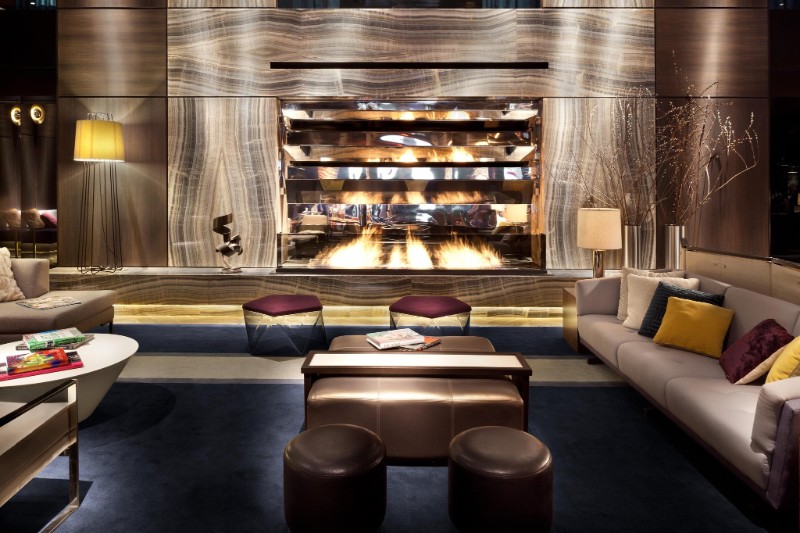

Philippe Starck’s interior design ideas for the living spaces were implemented more than success in this luxury hotel.
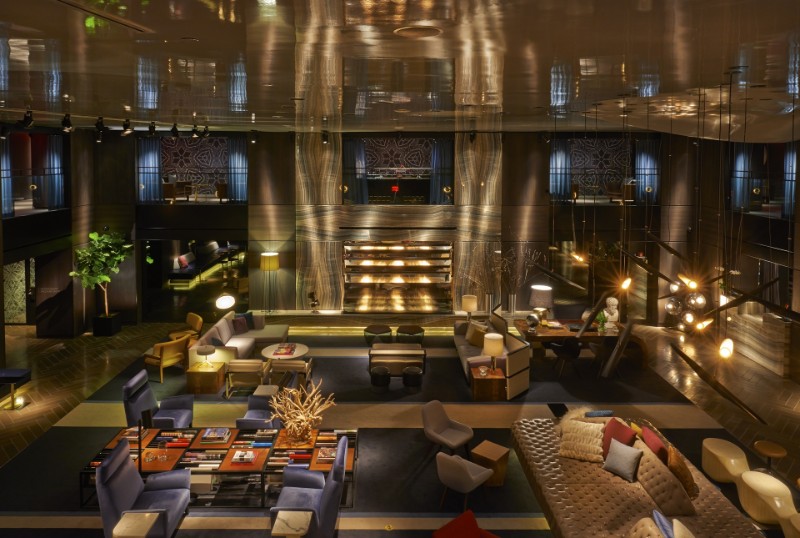
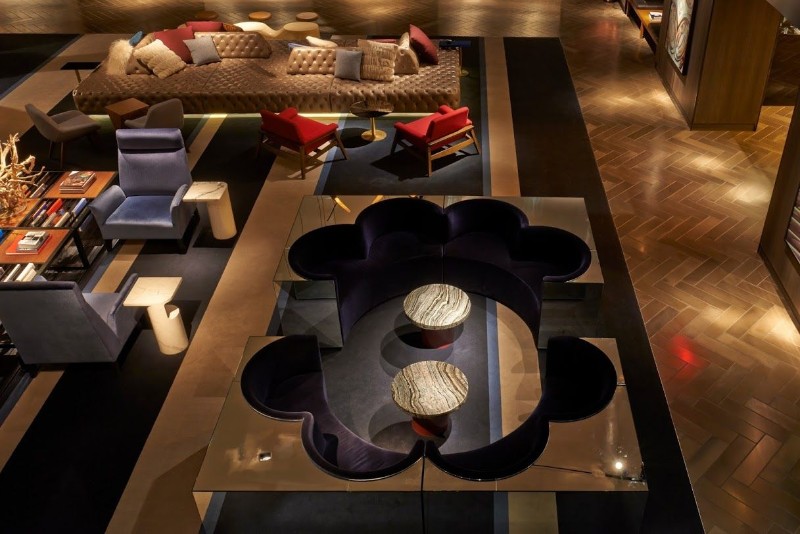
This hotel provides a clean and fresh clarification of Italian classicism. The repetition of herringbone tile work and stripes throughout the hotel’s various public seating and service areas generates a geometric rhythm and consistency among the various elements of the interior’s general design.
See also: Discover The Parisian Apartment Of Hervé Van der Straeten
[BDCK category=3 Keywords=”BL-masterbedroomcollection”,”BL-collection”,”BL-bedroom”][/BDCK]
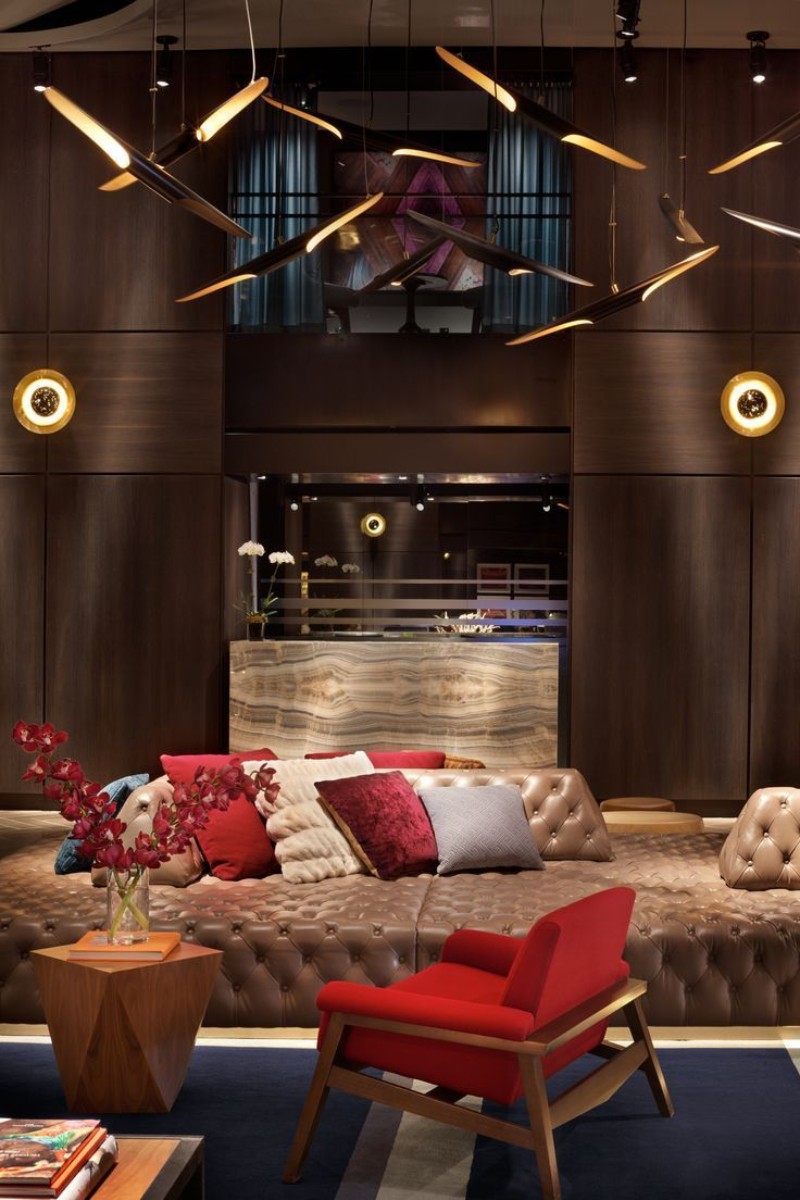
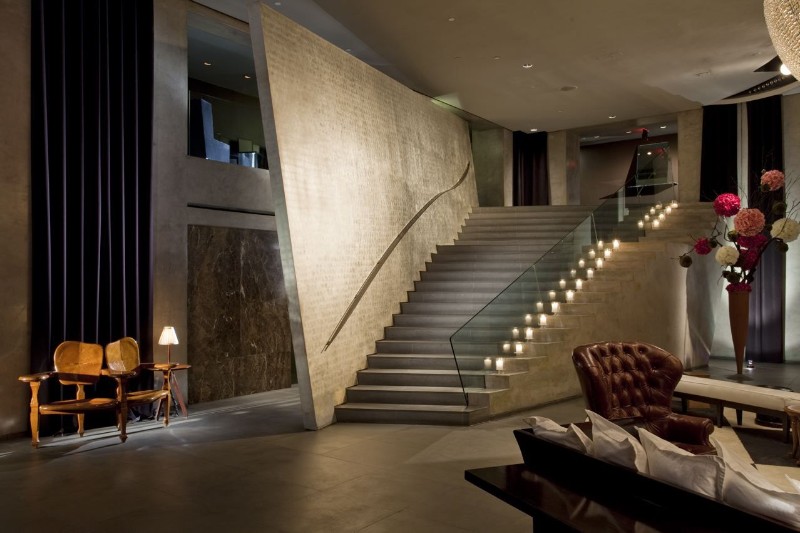
The Hotel Paramount was intended to appeal to visitors coming to New York for its vibrant nightlife. At the core of Paramount’s transformation is the redesign of the Hotel lobby. Redesign by Philippe Starck, the upstairs mezzanine makes a spectacle of the design by providing ample seating along the perimeter to enjoy an elevated view of the social scene below.

The contemporary interior design of the lobby builds on the drama and glamour of Lamb’s original vision and further enhances it with modern touches and saturated, muted tones to imbue the room with a cozy, sexy ambiance that will delight visitors and New Yorkers alike. Inside Hotel Paramount in New York, you can find vibrant hallway décor. Sleek, clean and stylish, the Paramount’s rooms and suites feature a contemporary interior design, modern furniture pieces with a unique design, lavish bathrooms, wireless high-speed internet, cable TV and other amenities demanded by today’s discriminating traveler.
The Hotel Paramount is a 597 -room boutique hotel in New York City’s Theater District and has an enormous lobby with many relax zones using different colors and textiles, like having many spaces in only one space, creating different zones with luxury design.
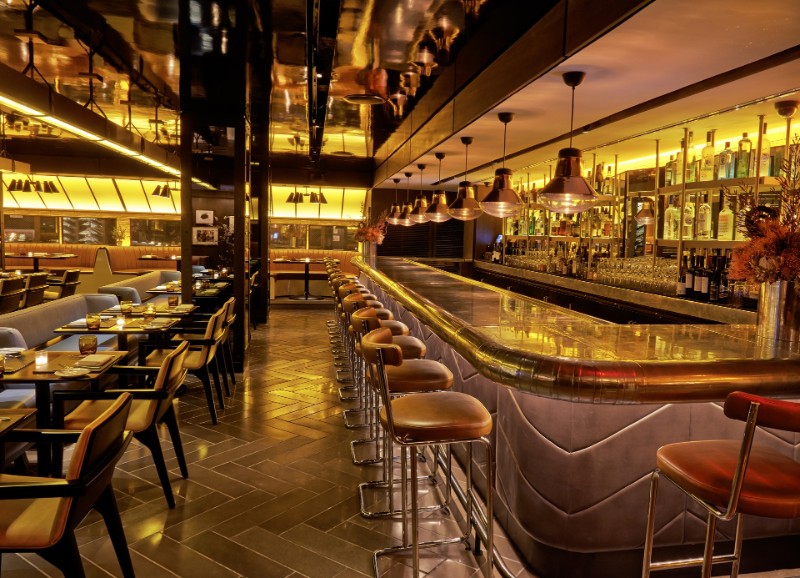
Adjacent to the main lobby is the relaxed, intimate environment of the Bar & Grill. The Bar & Grill continues the Hotel Paramount’s romance with Broadway, with warm and dramatic lighting, accents of theatre-inspired fabric, raised banquette seating and Candida Hofer-style vintage photography.
See also: Discover The Parisian Apartment Of Hervé Van der Straeten
[BDCK category=3 Keywords=”BL-limitededition”,”BL-limitededitioncollection”,”BL-collection”][/BDCK]