For ages, France has been put on a pedestal on the world’s stage for its artistic savoir-faire. Whether for cuisine, fine wine or fashion, the nation is famed for its expertise to perform everything it puts its hand to with natural style. So it’s no wonder that when it comes to French Top Interior Designers, you can find some of the most important movers and shakers the industry has ever known.
See Also: Discover Luxury Trends in Bathroom Interior Design

France really has to be pleased with its interior design. Design universities and schools in France are the most favourite and professional in all Europe. We could say that the mind of French people is also about fashion, design and aesthetic trends. Resulting in generations of professional and charismatic top interior designers.
In this article, we will present some of the best French top interior designers and their work.
Philippe Starck

Source: Philippe Starck
Internationally acclaimed French creator, designer, and architect, Philippe Starck is an untiring and rebellious citizen of the world, who considers it his duty to share his ethical and subversive vision of a fairer planet, creates unconventional places and objects whose purpose is to be “good” before being beautiful.
Gilles Boissier

Source: Gilles Boissier
When designers are working their magic on the illustrious Four Seasons hotels, you know they’re capable of something exceptional. It’s as though partners in both work and life Patrick Gilles and Dorothée Boissier were destined to work together. Their united creative minds are a force to be reckoned with and blending classic and contemporary styles with neutral colour palettes is their forte. We could wax lyrical forever about their ultra-sophisticated projects which include restaurants around the world and fashion spaces such as Moncler stores.
DOWNLOAD THE LUXURY ROOMS EBOOK FOR ENDLESS INSPIRATION!

François Catroux
François Catroux burst onto the Paris scene in the middle of the 1960s, when he settled here after ten years of constant travelling. Currently, the Paris-based interior designer’s client list is not the longest, but it is one of the best in the business of interior architecture. François Catroux constantly reinvents his interiors and that is why so many people go to his projects for interior design inspiration. His trademark for modern interior design is mostly the result of being confronted with old, crumbling interiors. But when there are antiques and fine objects, Catroux designs around them with great care.
Alberto Pinto

Source: Alberto Pinto
Alberto Pinto, under the direction of Linda Pinto and a strong team of 80 employees, perpetuates rigorously what made the success of the master. Eclecticism, luxury details, refinement is always the keywords when it comes to creating universes for its prestigious customers around the world: private residences, office buildings, airports, hotels, yachts and private jets.
India Mahdavi

Source: India Mahdavi
India Mahdavi studio is known for the diversity of its international projects. The interiors she creates are elegant, fluid, and reflect the essence of their location. Mahdavi has become an exclusive brand, offering a complete philosophy, based on a special vocabulary: high-end, joyful, nomadic, chic, elegant, ‘art de Vivre’. She is the reigning queen of colour.
MAGMA MIRROR

SEE ALSO: Ophelia Dining Table | The Piece Your Dining Room Needs
Charles Zana

Source: Charles Zana
Charles Zana has shared his taste and expertise in the most beautiful residential and public interiors around the world. In two decades, the architect, a graduate of the Beaux-Arts de Paris, has found his voice, forging his style and axes of influence on the lookout for discerning clients, demanding a unique vision. This vision is above all that of a lover of art, passionate about design, who speaks like an extract from key teachings.
Jean-Louis Deniot

Source: Jean-Louis Deniot
Jean-Louis Deniot décors are his playground, spaces in which spontaneity and magic are de rigueur. Recognized worldwide for his eclectic and emblematic interiors, he plays in a multiplicity of repertoires, never sticking to the purity of style, rather letting his academic training translate into a vocabulary that is both informal and bold.
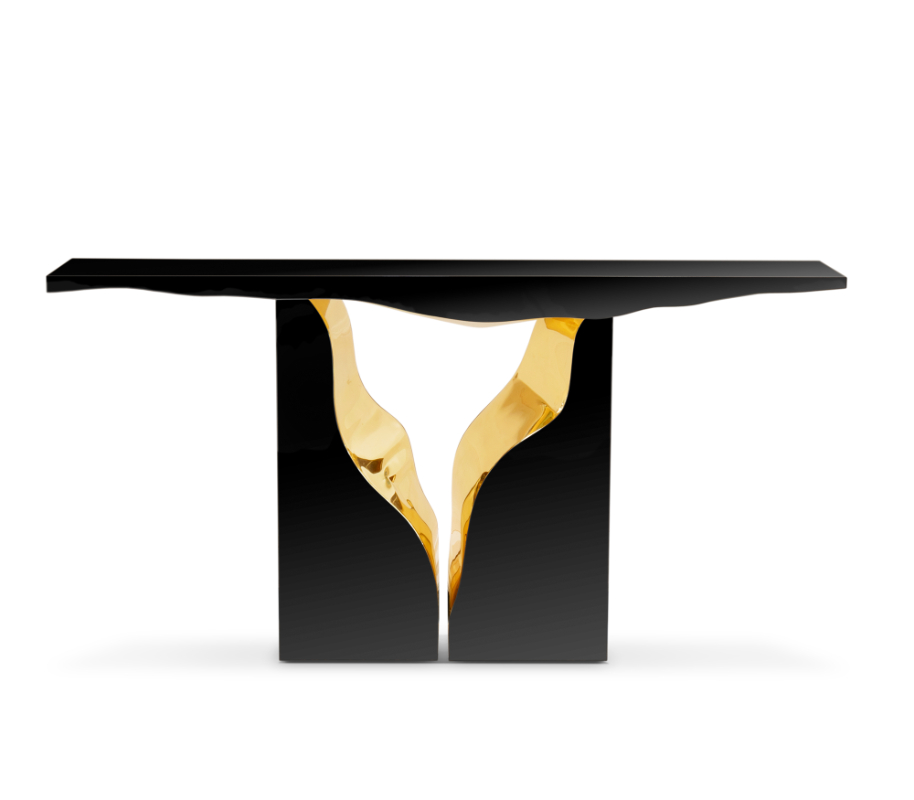
LAPIAZ BLACK CONSOLE
Gérard Faivre
To create an original work of art, Gérard Faivre imbues himself with the soul of each property. For him, each site is both a blank canvas and a source of inspiration. Depending on the place’s atmosphere, the artist determines the perfect layout, which he then completes with artwork, bespoke creations, and vintage details.
Pierre Yovanovitch

Source: Pierre Yovanovitch
Extreme luxury tempered by a restrained, purist sensitivity defines the “Made in France” signature of interior designer Pierre Yovanovitch, whose projects stand out for their refined sense of architectural scale over ostentation and fickle design trends. A true sense of strength and sobriety characterizes a Pierre Yovanovitch interior, achieved through a masterful interplay of harmonious volumes and strict lines softened by lighting and authentic materials.
SEE ALSO: 5 Modern Chairs That Will Inspire Your Interior Design
Ramy Fischler

Source: Ramy Fischler
Ramy Fischler is a Belgian designer based in Paris, with an eclectic creative practice. After graduating from the École Nationale supérieure de création Industrielle ENSCI-Les Ateliers, he joined Patrick Jouin’s agency in 2001. They worked together for almost ten years, during which time Ramy Fischler honed his taste for research, innovation and exploring new territories in design, taking the helm on numerous projects in the cultural, gastronomic and conceptual design spheres.
Mathieu Lehanneur

Source: Mathieu Lehanneur
Mathieu Lehanneur has been juggling the contradictions for 10 years in order to realize a design that is constantly pushing its limits and attracts the attention of prestigious clients around the globe. The objects are not just functional; they perform. Lehanneur addresses 21st-century concerns with an evolved sensibility — responsive noise-mitigating rovers, pods for recuperating lost sleep, a stereo for rekindling passion, meditative blue-sky windows — all built upon the body’s natural responses.
EMPIRE BLACK CENTER TABLE

Chahan Minassian

Source: Chahan Minassian
Chahan Minassian is more than a mere designer, not that there’s anything mere about the job. Chahan is a collectionneur, a gallerist, a connoisseur of joie de vivre in the world of interior design. Chalets in Gstaad, a bank in Zurich, a house in Geneva and another in Mustique, prestigious apartments in Paris and London and country villas in Quebec. These are just some of the projects interior designer Chahan Minassian has worked on.
ODETTE SOFA
Champeau & Wilde


Source: Champeau & Wilde
The combination of Laurent Champeau’s interior design skills with Kelli Wilde’s aptitude for decoration gave birth to one of the most iconic french duos of the design world. Their projects portray the client’s desire with a unique touch of wildness and passion, The duo is well known for its modern and sophisticated interiors through a subtle classical touch à la française.
Christophe Pillet

Source: Christophe Pillet
Even though he started his career in the design world late, Christophe Pillet has become a reference for his irreverent design projects. Specializing in interior design and interior architecture, he portrays french design through each of his projects adding a bit of sophistication but keeping in mind the practical side of it. From the astonishing Hotel Sahrai in Morocco to the awe-inspiring St. Tropez Villa, Christophe never ceases to amaze us with elegance and grace.
CM Studio Paris
CM Studio Paris aims to create a harmonious coherence between the interior and exterior of a space. John Coury and Florent Maillard are committed to linking each space to its immediate environment, finding the right architecture and interior decoration to match the era and the style of the time.
Stay with us to discover more top interior designers
See Also: Most Wanted Pieces To Transform Your Space