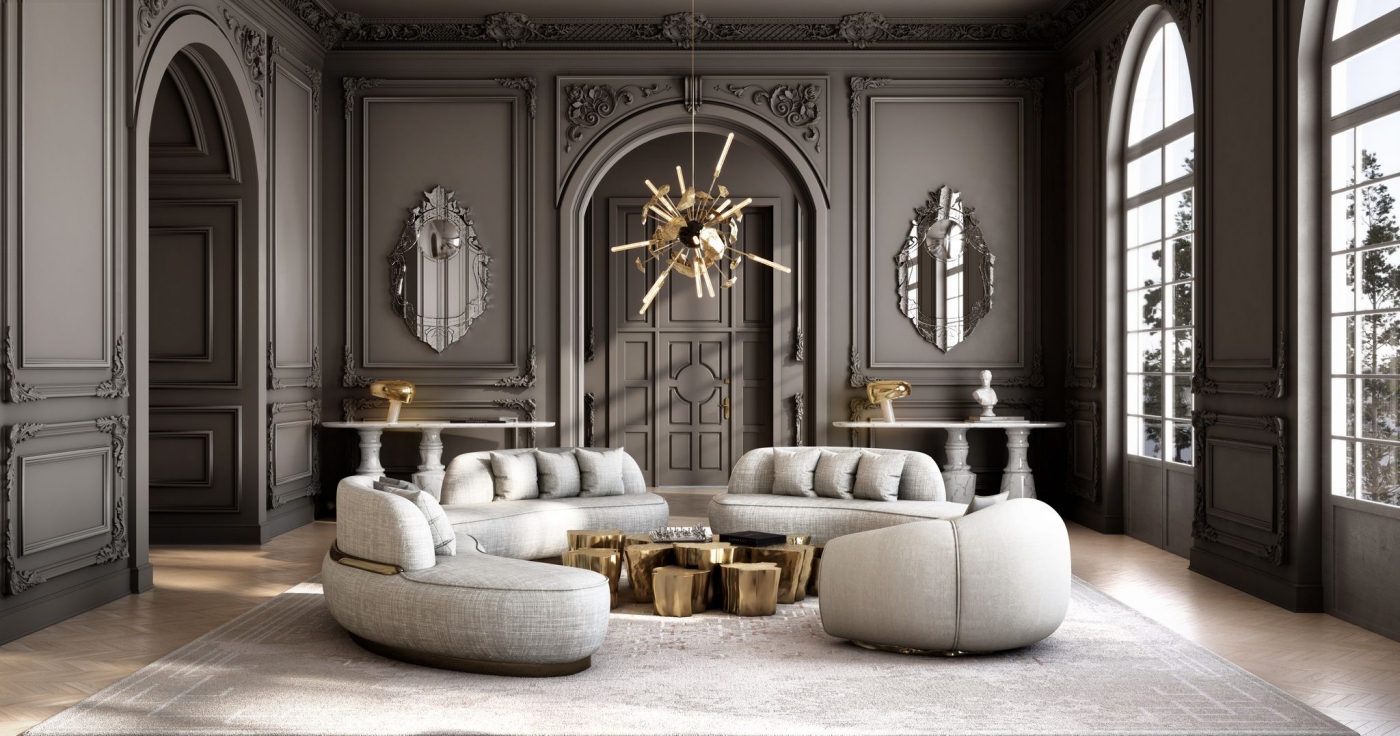
There’s a version of the console that exists in most homes: a flat surface, four legs, something to put keys on. It’s functional. It doesn’t ask anything of you. And then there are luxury consoles that are genuinely hard to walk past without looking twice. Pieces that give a hallway, a living room, or an entryway an identity it didn’t have before.
The console is an underestimated category. It sits in spaces people move through rather than occupy, which means it gets noticed briefly and repeatedly over time. The wrong piece in that position is invisible at best, wrong-footed at worst. The right luxury consoles becomes one of the most reliably satisfying things in a room.
Five Boca do Lobo consoles that justify the category are below.
See Also: Milan Design Week 2026: The Global Stage of Collectible Design

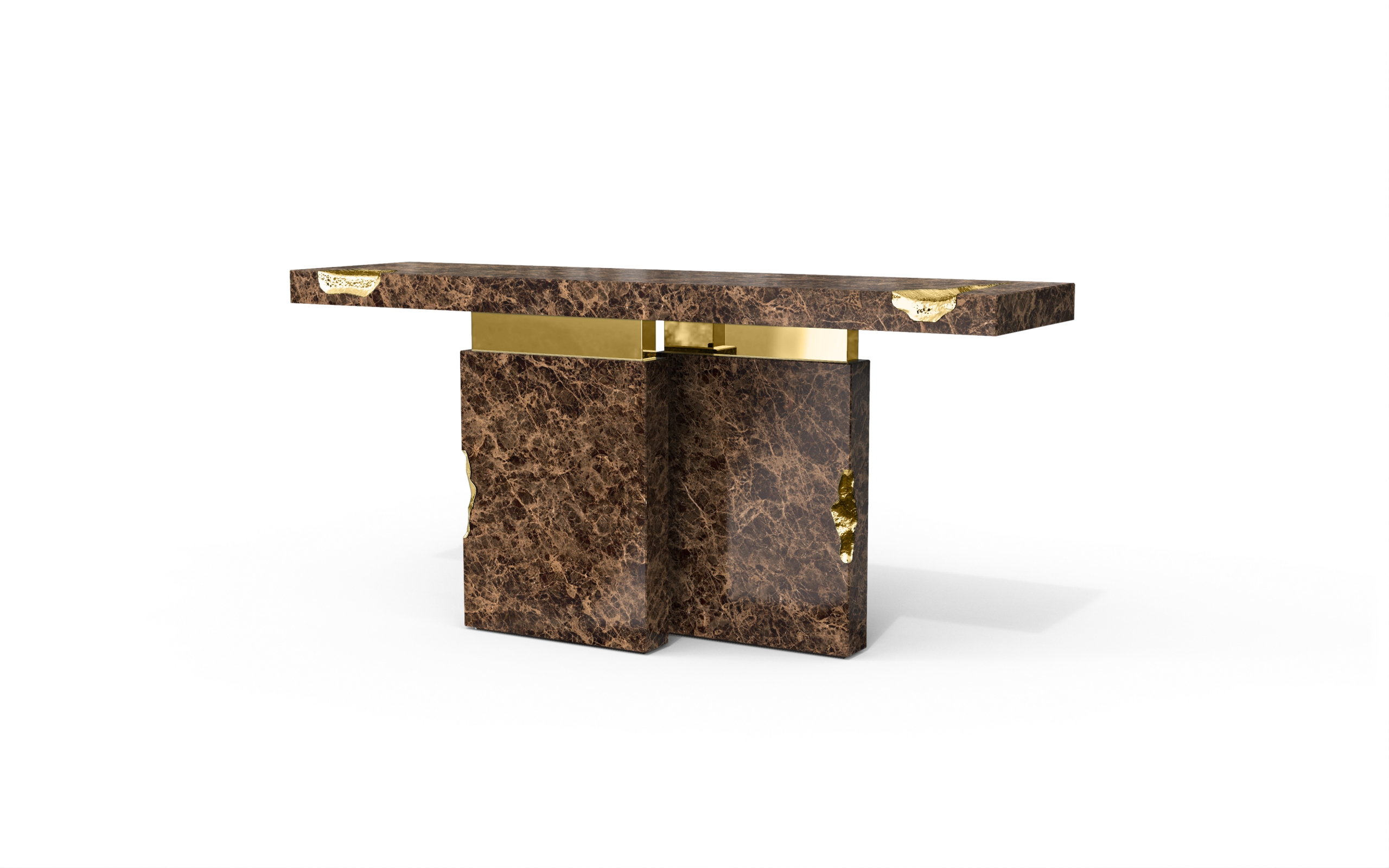
Luxury Consoles Piece 1: Lapiaz Console
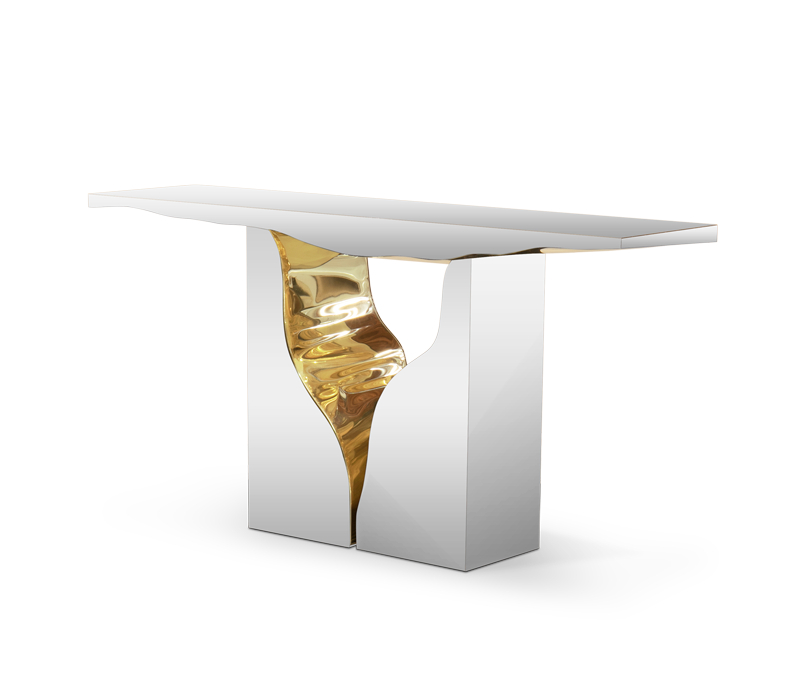
The Lapiaz Console takes its name from lapiaz formations, the grooved geological patterns that develop in limestone as water moves through it over centuries. The cast metal surface reproduces that texture with enough fidelity that the piece reads less like furniture and more like a section of something found. The surface isn’t smooth. It has depth, direction, and irregularity.
In the context of luxury consoles, this matters because most high-end hall pieces lean on precision as the signal of quality. Perfectly aligned edges, flawless lacquer, machined detail. The Lapiaz takes the opposite position. The surface texture is the design, and it’s one that genuinely can’t be reproduced twice in the same way. That gives each piece a specificity that polished finishes don’t have.
It works particularly well against clean, minimal architecture. The more restrained the wall behind it, the more the surface texture becomes the thing you look at. A plain plaster wall in pale grey, stone floors, the Lapiaz Console, nothing else. That’s a room that knows what it’s doing.
According to Dezeen, organic texture — surfaces that reference natural formation processes rather than manufactured precision — has become one of the most consistent directions in high-end furniture design over the past several years, with no signs of slowing. Among other luxury consoles, the Lapiaz fits that direction without looking like it was designed to.


Luxury Consoles Piece 2: Heritage Console
The Heritage Console is the piece in this group that rewards proximity most. The wood surface uses a hand-application technique that creates a three-dimensional texture visible at mid-distance and increasingly detailed the closer you get to it. Combined with the brass hardware, it reads as warm and precise at the same time.
Most luxury consoles in the warm-material category make a trade-off: warmth comes at the cost of rigour, or rigour comes at the cost of warmth. The Heritage doesn’t make that trade. The craftsmanship in the wood surface is as precise as anything in the polished-metal category. It just doesn’t announce itself the same way.
For rooms that already have strong architecture — heavy mouldings, dark marble, richly coloured walls — the Heritage has the presence to hold its position without competing. It’s also one of the more versatile luxury consoles in this range in terms of context: it works in an entryway, a living room, or a dining room side wall with equal conviction.
House Beautiful has consistently identified hand-applied wood finishes as one of the most durable directions in luxury furniture, noting that the tactile quality of genuinely crafted surfaces holds attention in a way that printed or machine-applied finishes don’t.

Luxury Consoles Piece 3: Newton Console
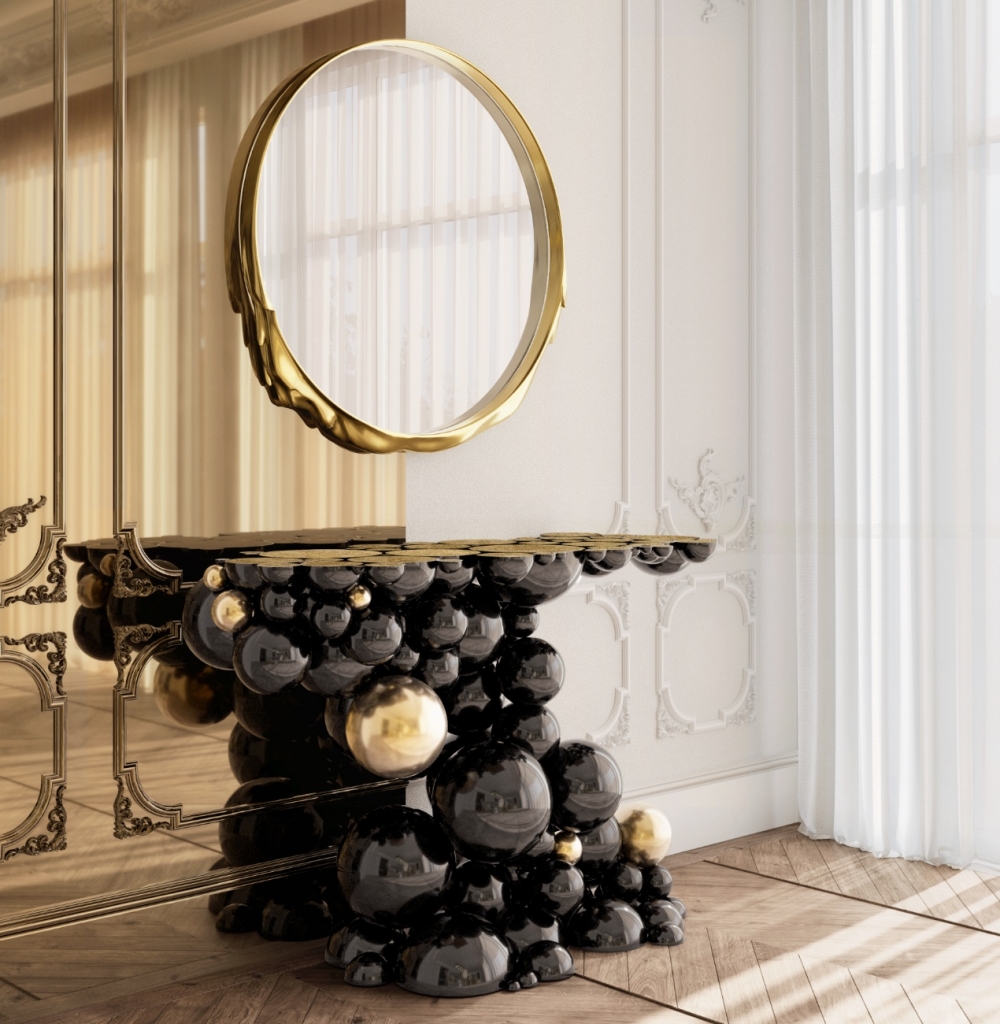
There’s a version of the natural material console that’s everywhere right now. Light oak, slightly bleached, on tapered legs. Safe. Inoffensive. Forgettable in three years. Among luxury consoles, the Newton Console is a different kind of natural material piece entirely.
The top uses myrtle root, a material that takes decades to develop and produces a grain structure that can’t be replicated between pieces. The gold base responds to the surface above it rather than competing with it. The combination is one of the more genuinely singular options in luxury consoles because the material itself guarantees that what you’re buying isn’t something anyone else has in exactly the same form.
This is worth stating plainly because it’s often said about luxury furniture in general and is rarely true. With myrtle root it actually is true. The Newton Console you buy is not the same as the Newton Console someone else bought. That’s not a marketing position. It’s just what the material does.
Architectural Digest has noted a growing distinction in high-end residential design between “natural-looking” and “genuinely natural” materials — and identified the latter as a defining characteristic of the most considered interiors being published today.


Luxury Consoles Piece 4: Empire Console
The Empire Console is the most architectural piece in this group. The polished brass and dark oxidized base have a geometric structure that gives the piece visual weight well beyond its actual dimensions. It doesn’t fill a hallway. It anchors one.
What makes it one of the more useful luxury consoles for entryways specifically is that it doesn’t require much around it. A mirror above, a single object on the surface, and the entry is complete. The base detail at floor level is visible throughout, which means the piece keeps giving something to look at from every angle and position in the room.
The Empire works in luxury consoles contexts where the goal is precision rather than warmth. It suits rooms with hard materials — marble, polished stone, concrete — more naturally than soft ones. In those settings, the geometric base reads clearly and the brass picks up whatever light is available. It’s a reliable choice for spaces where there isn’t room for error.
Elle Decor has written about the growing preference for luxury consoles pieces with strong base geometry in high-end entryway design, noting that the architectural quality of the base is increasingly the factor that separates considered choices from generic ones in the category.

Luxury Consoles Piece 5: Pietra Console
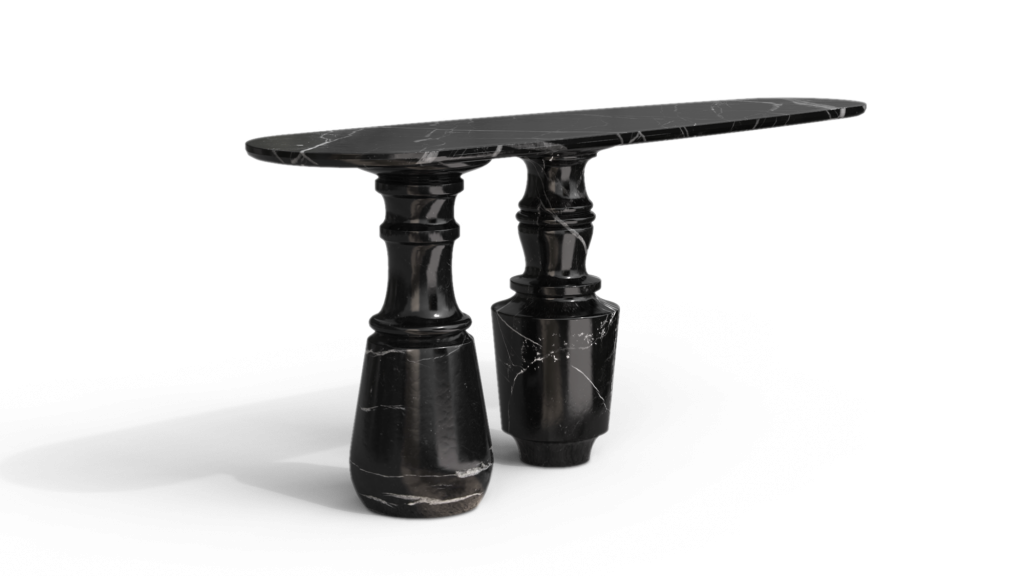
The Pietra Console has a different quality from the other pieces in this group. Where the Empire is precise and the Lapiaz is textural, the Pietra is substantial. The stone top and carved base have a physical presence that most luxury consoles in the category don’t manage. It doesn’t look like it was designed. It looks like it was made.
That distinction matters in rooms where the architecture already has gravity. A classical interior with heavy cornicing, ornate plasterwork, significant marble floor area — spaces that need furniture with enough visual weight to hold their position rather than disappear. The Pietra is built for that context. It doesn’t fight the room. It occupies it with the same confidence.
The stone surface also performs differently over time from lacquered or metal finishes. It develops a quality with use that manufactured surfaces don’t. For a Luxury consoles in a regularly used hallway or living room position, that’s worth thinking about. It’s one of the few pieces in the consoles category that actively looks better once it’s been in a room for a while.
Wallpaper* has consistently recognised stone-forward furniture as one of the most enduring material directions in luxury interior design, noting that the weight and permanence of stone surfaces align with the direction high-end residential clients are moving in.
What Makes a Luxury Console Worth It
These five pieces don’t share a material or a form. What they share is that each one has something specific to say. The Lapiaz has a surface that can’t be replicated. The Heritage has warmth that doesn’t sacrifice rigour. The Newton has material singularity. The Empire has architectural precision. The Pietra has gravity.
Luxury consoles earn their place in a room when they have one of those qualities. Pieces that are merely expensive without having a reason to exist don’t. The difference is visible immediately in the spaces they end up in.
Browse the full consoles collection, or explore how these pieces work alongside mirrors, lighting, and sideboards in a complete living room furniture approach.