In the world of luxury interior design, few elements command attention quite like blue tiles. From the sun-drenched facades of Lisbon to the most opulent contemporary interiors, blue tiles have transcended their Portuguese origins to become a defining motif of the maximalist movement. Their mesmerizing patterns, rich cultural resonance, and undeniable visual impact make them the perfect vehicle for spaces that dare to be bold, layered, and unapologetically expressive.

See Also: Milan Design Week 2026: The Global Stage of Collectible Design
The Rise of Blue Tiles in Maximalist Design
Maximalism, at its core, is a celebration of excess, a deliberate rejection of restraint in favor of richness, color, and storytelling. Blue tiles fit seamlessly into this philosophy because they bring centuries of narrative and artistry to every surface they adorn. Unlike minimalist design, which strips spaces down to their barest essence, maximalism invites history, culture, and craftsmanship to coexist in a single room and few materials embody that invitation more powerfully than hand-painted Portuguese azulejos, or blue tiles.
The current wave of maximalist interiors has seen designers embrace blue tiles not merely as backsplash accents, but as full-blown statement surfaces that define the character of an entire space. Whether cladding the exterior of a sideboard, wrapping the curves of a bathtub, or forming the geometric skin of a cabinet, blue tiles transform furniture into functional art. Their hand-painted nature ensures that no two pieces are ever identical, a quality that lies at the very heart of maximalist thinking.
Heritage Sideboard: Where Portuguese Legacy Meets Living Art

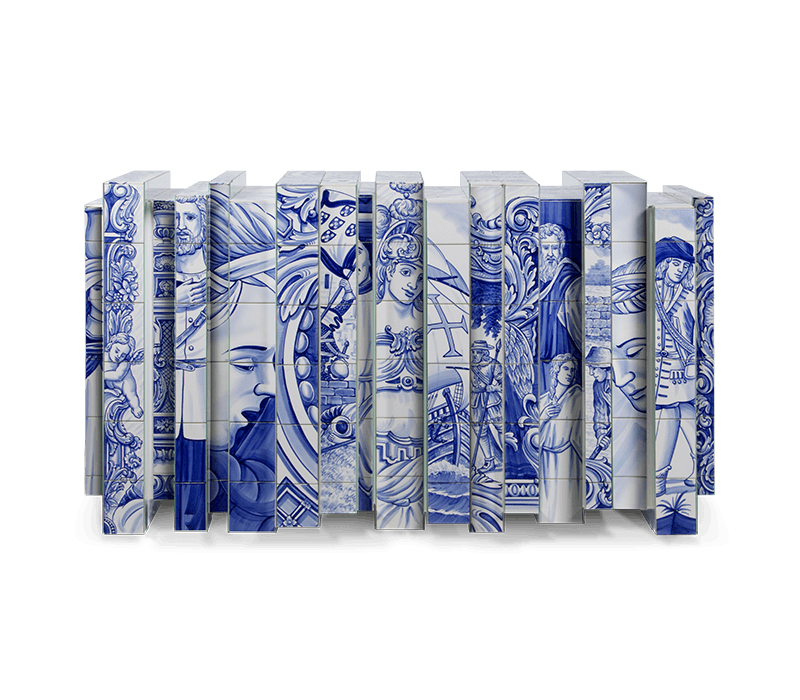
The Heritage Sideboard stands as perhaps the most iconic expression of this trend. Covered entirely in traditional blue tiles, this architectural piece portrays scenes from Portugal’s Discoveries era, turning a functional storage unit into a panoramic canvas of maritime history. Each tile is individually crafted by skilled artisans, ensuring that centuries of cultural storytelling are captured in a single, breathtaking panel. Vertical mirrors on the lateral surfaces amplify the visual depth, while a glossy gold leaf interior creates a moment of pure theatricality.
In a maximalist living room, the Heritage Sideboard does not simply occupy space; it commands it, anchoring the room with a gravitas that only authentic craftsmanship can provide.

Carmo Sideboard: Kintsugi and the Beauty of Imperfection

Where the Heritage Sideboard celebrates historical narrative, the Carmo Sideboard pushes the concept further by introducing the Japanese art of kintsugi into the azulejo tradition. Covered in hand-painted blue tiles, this piece takes the cracks and imperfections of the ceramic surface and highlights them with gold strokes, transforming what might be considered flaws into deliberate, luminous features. The result is a sideboard that celebrates beauty in the scars of time, a philosophy that resonates deeply with maximalism’s embrace of the layered, the imperfect, and the deeply personal.
Inside, four drawers lined with gold leaf and two bronzed glass shelves create a refined interior that rivals the opulence of ancient palaces. For those curating bold new additions to their interiors, Carmo offers a piece that is quite literally one of a kind, since the process of breaking and restoring the tiles is never the same twice.

Lapiaz Tiles Console: Organic Drama in Blue and Brass

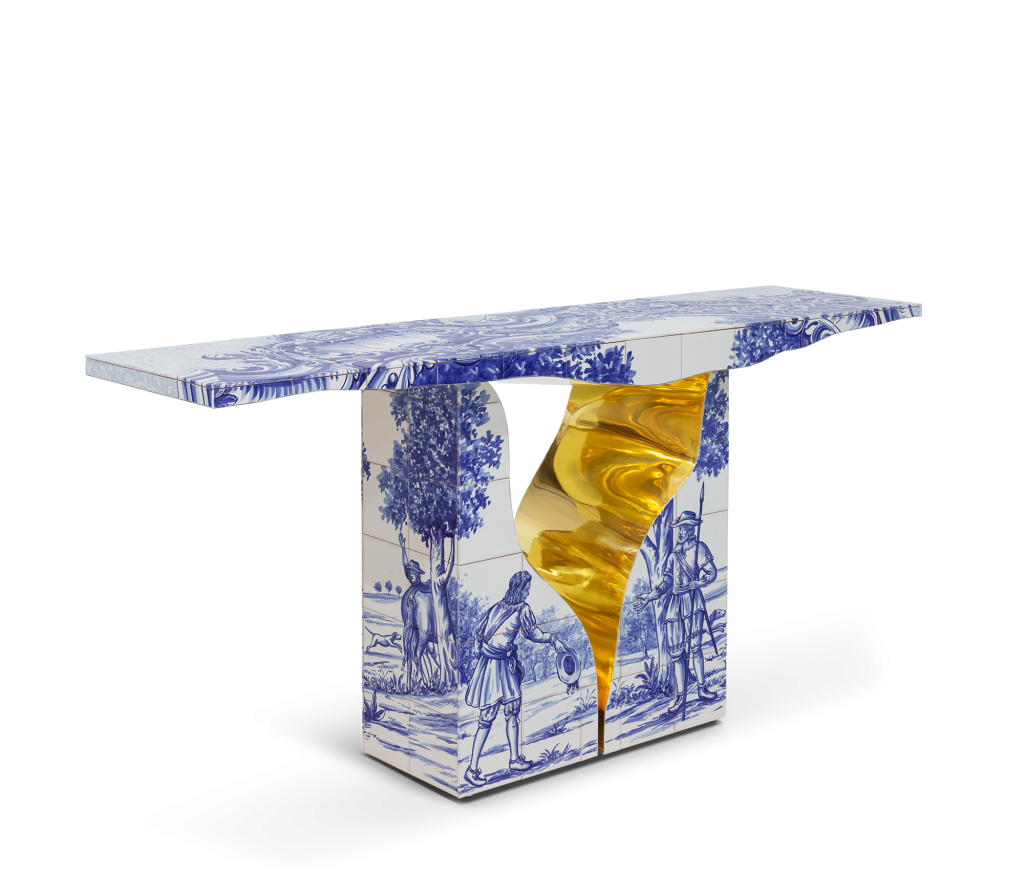
The Lapiaz Tiles Console demonstrates how blue tiles can be paired with unexpected materials to achieve a dramatic maximalist effect. Masterfully covered in white and blue tiles, its surface pays homage to the most representative art form of Portuguese culture. Yet the true surprise lies in the organic crack that splits through the tile cladding, a polished brass sheet, manually fitted and freshly cracked to reveal a rich golden interior, inspired by authentic karst formations.
This juxtaposition of the cool, geometric precision of blue hand-painted tiles against the raw, molten warmth of exposed brass is precisely the kind of tension that maximalism thrives upon. As a console in an entryway or hallway, the Lapiaz Tiles creates an unforgettable first impression, setting the tone for an interior that refuses to play it safe.
Quarry Tiles Center Table: Geometric Intensity at the Center
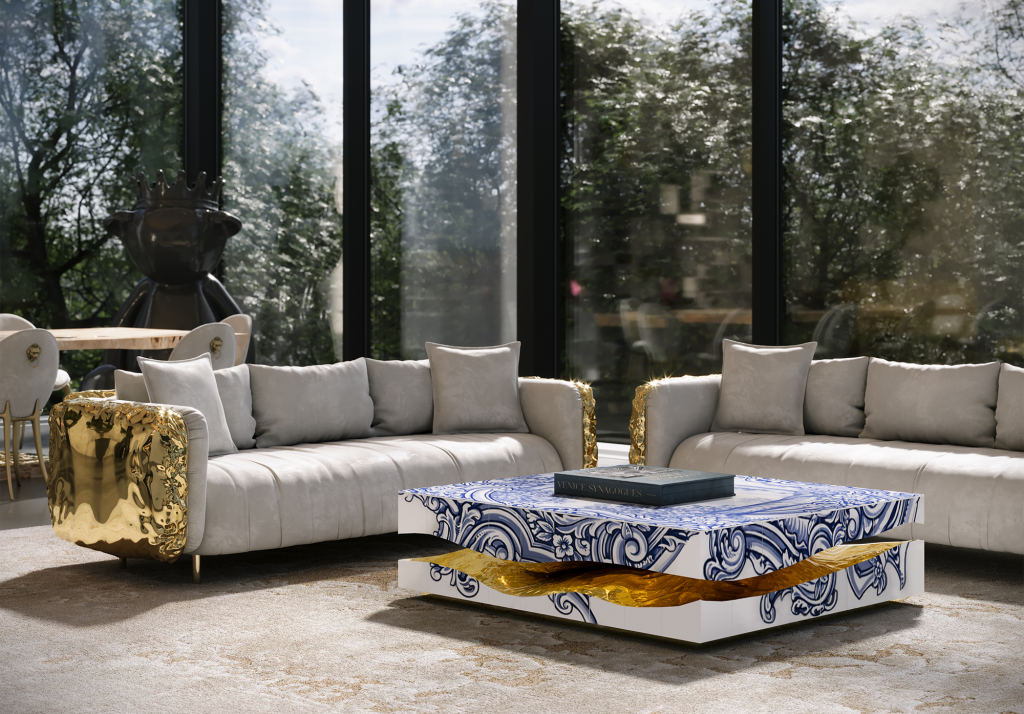
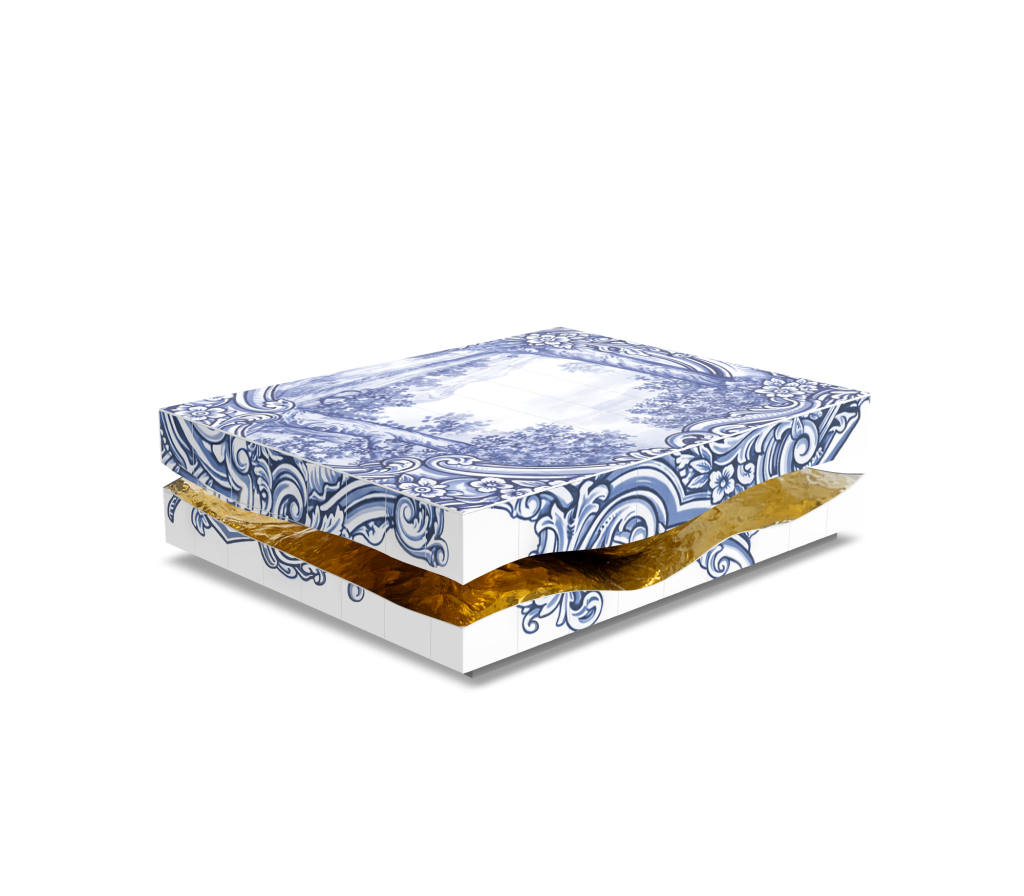
Living rooms demand a focal point, and the Quarry Tiles Center Table delivers one with striking confidence. Clad in an intricate mosaic of blue hand-painted tiles, this piece channels the bold, architectural spirit of the Quarry collection through the lens of Portuguese tile painting. The vibrant geometric surface is harmoniously interrupted by a frame of hammered polished brass, creating a sophisticated interplay of light and reflection.
This duality is a masterclass in how maximalist design balances intensity with refinement. For designers seeking coffee and side tables that anchor a seating arrangement with undeniable presence, the Quarry Tiles Center Table transforms a functional surface into a functional artwork.
Pixel Heritage Cabinet: Avant-Garde Meets Ancestral Craft
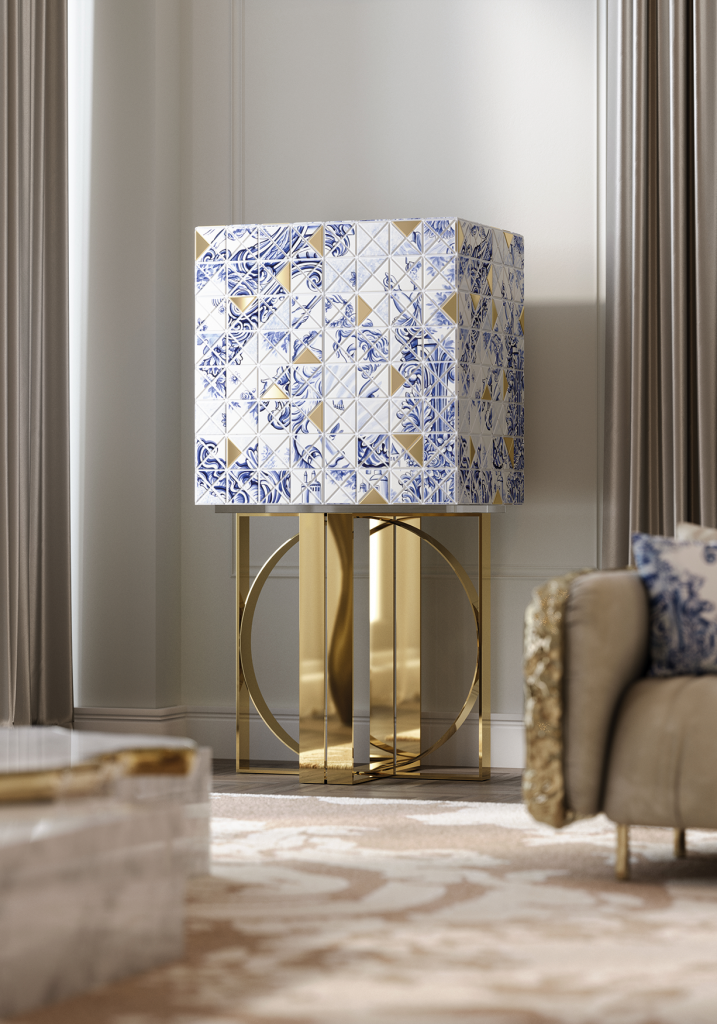
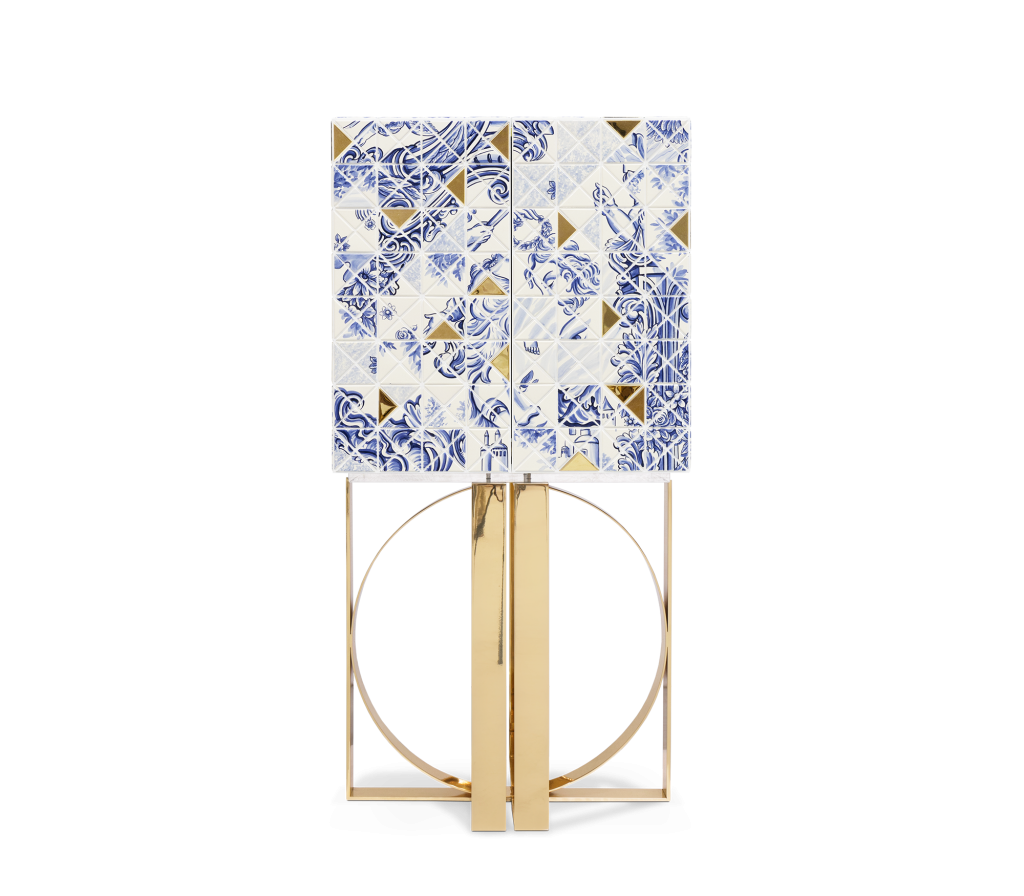
The Pixel Heritage Cabinet represents a bold collision between avant-garde geometry and ancestral Portuguese tilework. Built from 1088 individual triangles, the cabinet’s upper section plays with perception through a striking composition of walnut root veneer, gold leaf, and black lacquer. The lower section, however, is where the blue tiles tradition asserts itself, hand-painted azulejos grounding the piece in cultural heritage while the angular forms above reach toward the futuristic.
Behind its two doors, a timeless combination of aged mirror and nine interior drawers with golden knobs awaits, while the doors themselves are upholstered in diamond-quilted cream velvet. A polished brass base completes the silhouette. The Pixel Heritage Cabinet proves that maximalism is not about accumulation for its own sake, but about the intelligent layering of craft, material, and narrative into a single extraordinary piece.
Heritage Bathtub: Immersive Luxury in Blue Ceramic
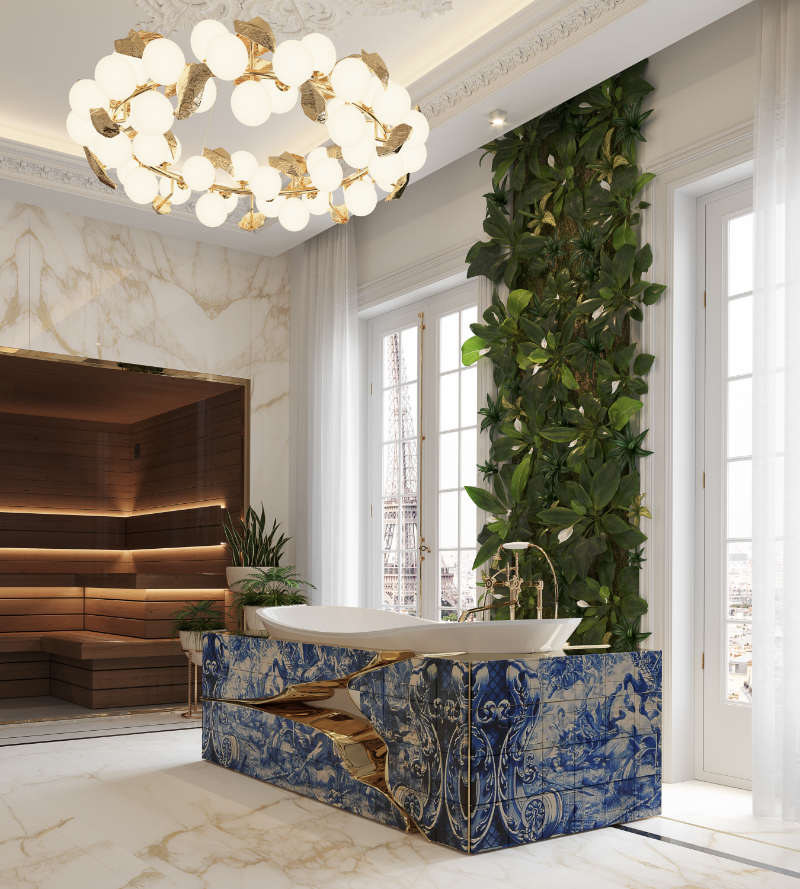
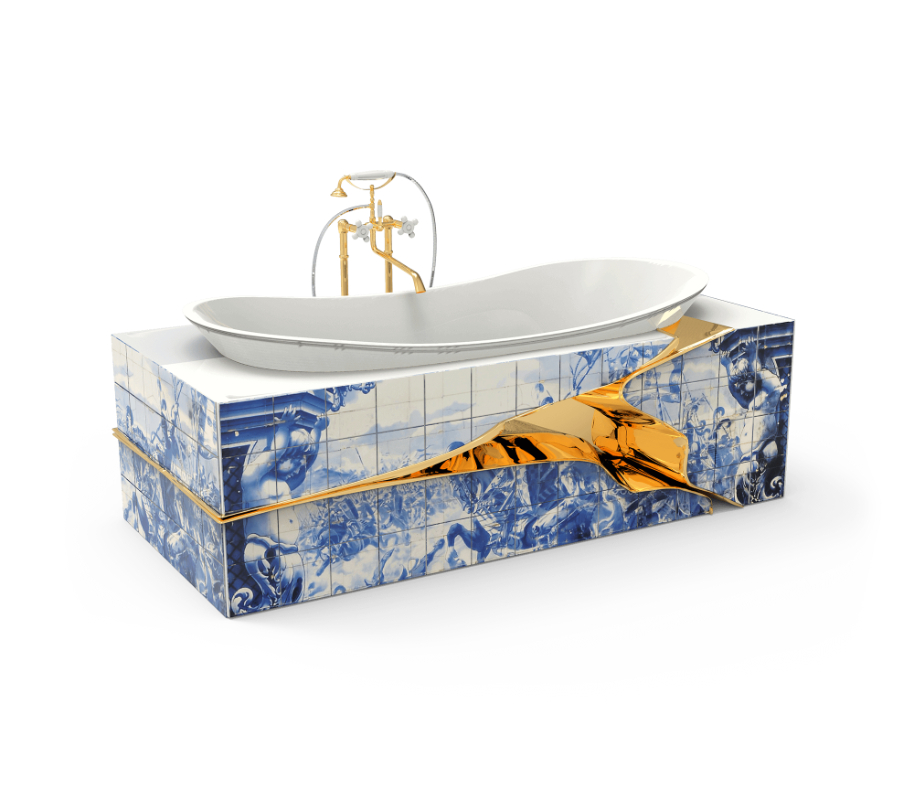
Maximalism need not be confined to living areas and dining rooms. The Heritage Bathtub extends the blue tile tradition into the most private sanctuary of the home, the bathroom. Covered entirely in traditional hand-painted blue tiles and featuring a gold-painted tear finished with high-gloss varnish, this statement bathtub transforms an everyday ritual into an experience of theatrical luxury.
Its high-gloss fiberglass structure, combined with a black or white lacquered cast iron tub, creates a piece that stands as both sculpture and vessel. In a maximalist bathroom, where every surface is an opportunity for expression, the Heritage Bathtub becomes the indisputable centerpiece, a reminder that even the most functional spaces deserve the full force of artistry.
Styling Blue Tiles in a Maximalist Interior
Incorporating blue tile furniture into a maximalist scheme requires confidence and a willingness to let each piece breathe while still participating in the broader visual conversation. Pair the Heritage Sideboard with rich velvet seating in deep jewel tones to echo the depth of the blue tiles. Let the Quarry Tiles Center Table anchor a seating arrangement beneath an oversized lighting fixture that mirrors its geometric rhythm. Use the Lapiaz Tiles Console in a foyer layered with patterned wallpaper and gilded mirrors to create a moment of arrival that guests will not soon forget.
The key to making blue tiles work within maximalism is to treat them not as decoration, but as architecture, as structural elements that define the identity of a space. Each handcrafted piece carries the weight of Portuguese tradition and the ambition of contemporary design, making blue tiles not just a trend for maximalism, but its most eloquent language.