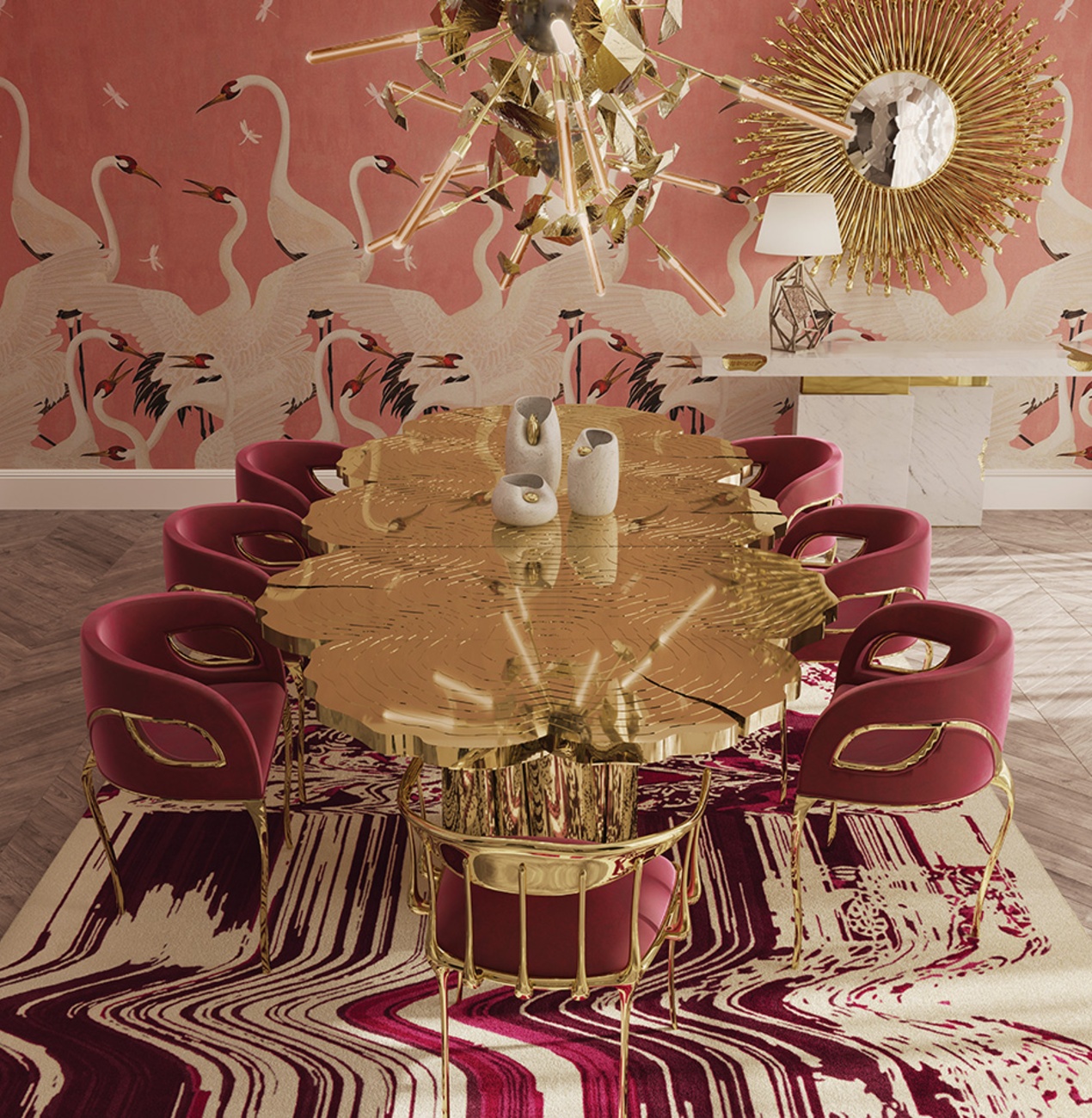
What makes dining rooms feel luxurious
A lot of dining rooms get styled for the photograph, then forgotten. The chandelier is sized for the camera. The tables reads as a prop. The seats never get sat in. I have walked out of enough of those rooms to know the difference between one built for a magazine and one built for a Tuesday night dinner with eight people who actually like each other. The second kind is harder to make. Architectural Digest made a similar case recently, that the most interesting dining rooms right now are the ones designed to be used.
A grown up dining rooms moment comes from a few honest choices. One table that can hold its own with nothing on it. Chairs that feel as good at hour three as they did at minute one. lighting that flatters the food and the people eating it. cabinets or consoles nearby for the things you actually need, like extra glasses and a place to drop the serving plate. rugs underneath to absorb sound. mirrors opposite a window to bounce daylight back onto the table. None of this is expensive in concept. It is expensive in execution.
The next five sections walk through five Boca do Lobo pieces that show up in the best dining rooms I have spent time in. A pair of tables, a pair of chairs, and one wildcard. Each one earns its place by doing something specific, not by being pretty in a corner. dining rooms built around pieces like these tend to look composed the moment you walk in.
Empire Dining Table: architectural weight
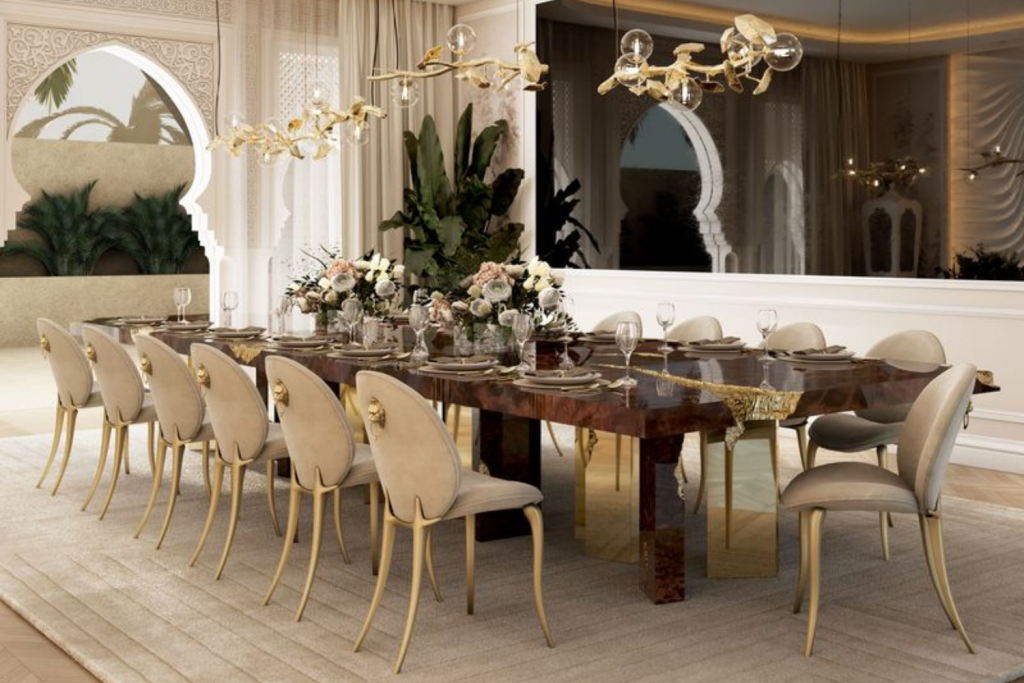
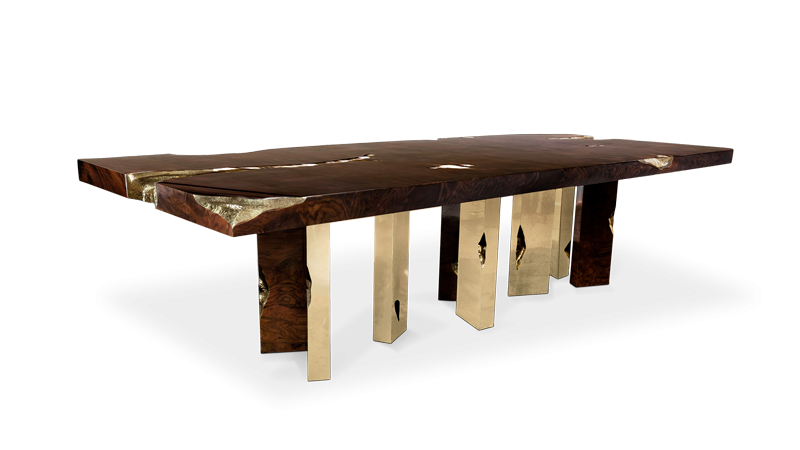
The Empire Dining Table is the piece I send people to when they say their dining rooms feel small. The base is architectural, almost monumental, with a solidity that few tables can match. You feel the structure when you sit down. The weight is not for show. It changes how the room reads.
In a larger dining rooms footprint, the Empire carries the space without help. In a tighter room it still works, because the lines are clean and the base is open enough to let light pass through. Pair it with seats that have presence but not bulk. A sculptural lighting element above, ideally a low brass pendant, adds verticality without competing with the horizontal lines of the table. Skip the tablecloth. The surface is part of the design. Elle Decor has written about how scale, more than style, is what makes dining rooms feel right. The Empire is the clearest example of that principle I know, and the reason it shows up in serious dining rooms again and again.

N11 Chair: a chair that holds the room

Chairs are the most underloved piece in dining rooms. People spend months picking the table and then buy eight chairs that match the upholstery. The N11 Chair is what happens when a chair gets the same attention as the table. The back is sculptural. The proportions read as a piece of furniture, not a perch.
Used as a full set of eight or ten around a long table, the N11 gives dining rooms a rhythm. The silhouette repeats, the eye reads the pattern, and the room feels composed. Used as a pair of host and hostess chairs at the heads of the table, with simpler chairs down the sides, the N11 becomes the accent. Both approaches work. The mistake is mixing it with a chair that fights it. living rooms get this right more often than dining rooms do, because people accept that a sofa can be a statement. House & Garden has a useful guide on pairing statement chairs with quieter ones, which is the move most dining rooms actually need.
One thing worth saying out loud. The N11 is comfortable. Statement chairs often are not. Buying a chair that looks great for forty minutes and falls apart at hour two is how dining rooms become rooms nobody wants to sit in. The dining rooms that get used are the ones where the chair earned its place before the tablecloth came out.

Fortuna Dining Table: wood with a pulse

The Fortuna Dining Table is the table I keep coming back to when a client wants warmth in dining rooms without going traditional. The top is solid wood, finished to feel like a living material rather than a board. The legs are rooted and grounded, almost botanical. The whole object reads as something that grew in the room, not something delivered in a flat pack. It is the table I most often specify for dining rooms that need to feel like home.
In dining rooms with cool light, plaster walls, or a lot of glass, the Fortuna is the warm note that keeps the space from feeling clinical. Pair it with rugs in a natural fiber underneath, lighting with a soft tungsten bulb overhead, and cabinets in a similar wood tone nearby. Avoid pairing it with high gloss consoles or anything too lacquered. The contrast kills the warmth. mirrors placed opposite a window can pull daylight back onto the wood. Dezeen has noted the same drift across recent dining room projects, with wood taking back the center of the room from glass and stone.
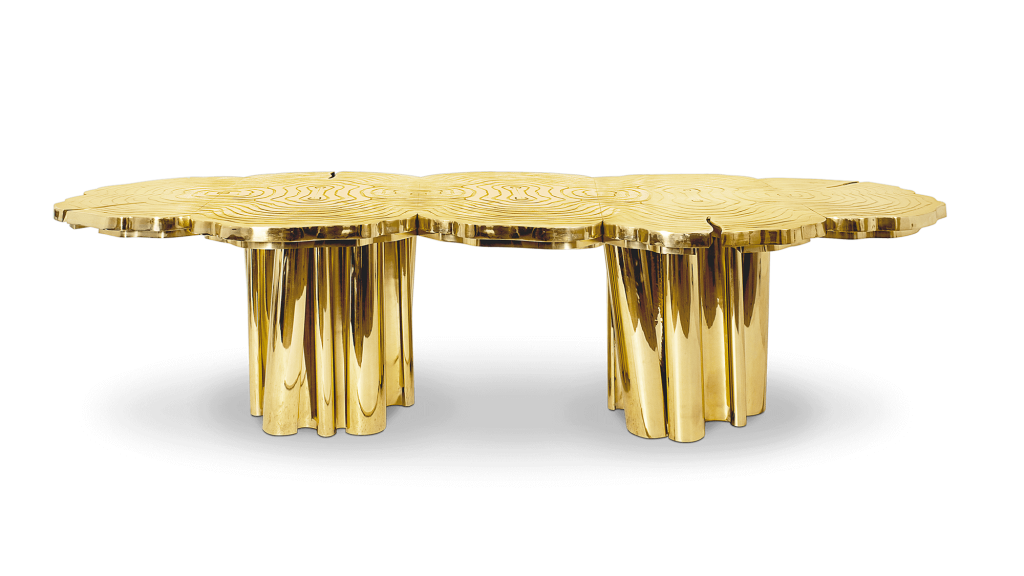
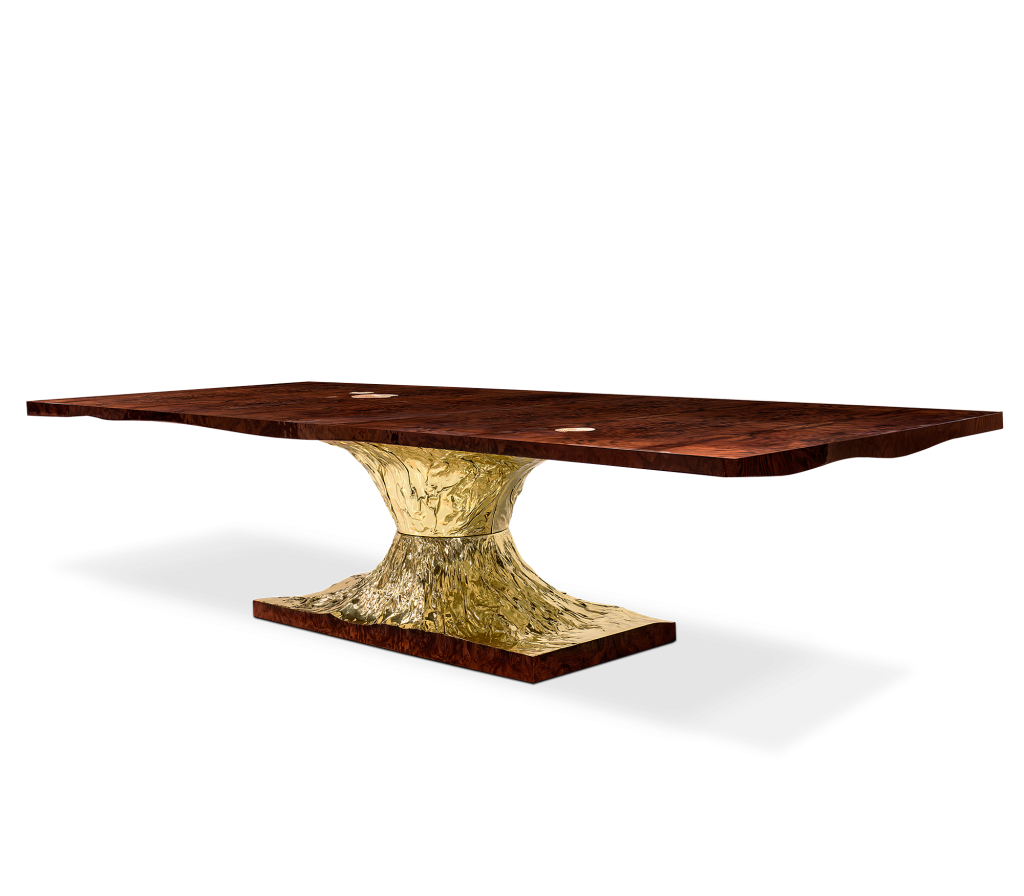
Metamorphosis Dining Table: a statement that earns its room
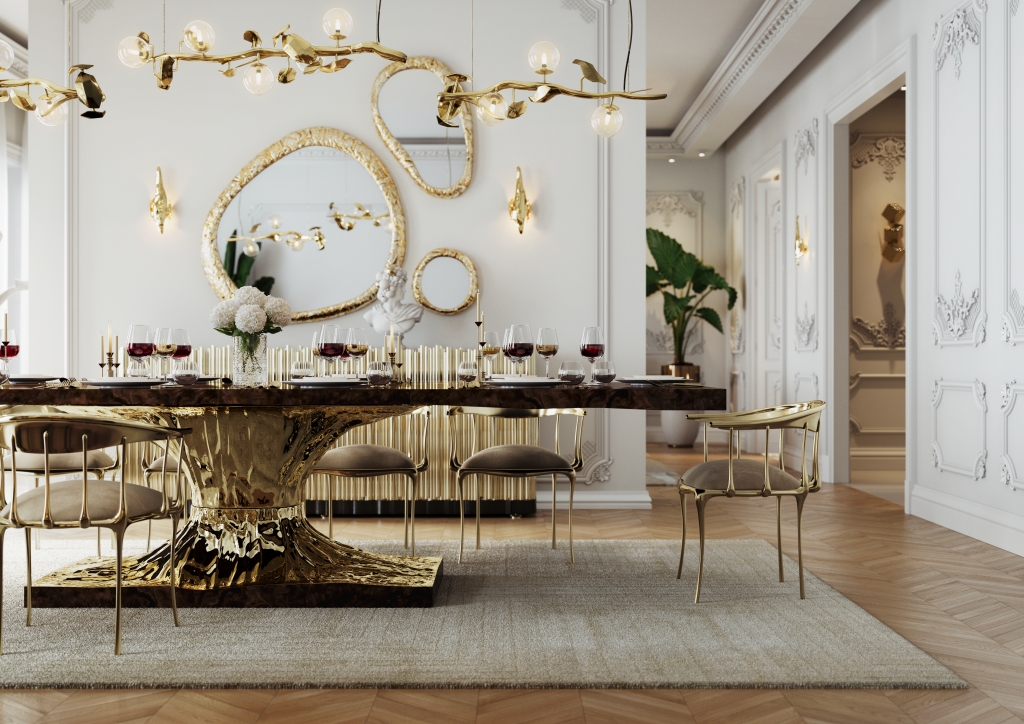
The Metamorphosis Dining Table is the loud one in this list. It carries a sculptural base that reads more like a piece of art than a piece of furniture. In the wrong room it would be too much. In the right dining rooms setup, it is the room.
Restraint around it matters more than anything else. Plain walls. Quiet seats with clean lines, not competing silhouettes. lighting that is soft and even, not a competing sculpture overhead. mirrors placed where they reflect the table back into the room without doubling the visual noise. When those choices line up, the Metamorphosis does what its name suggests. It changes the living quality of the space around it. Implicit in all of this is that the table needs space. Do not squeeze it into a corner. dining rooms that try to fit a statement table into too tight a footprint end up looking like a showroom, not a home. The best dining rooms for the Metamorphosis are the ones that give it room to breathe and let the base do the talking.
Soleil Chair: the chair that softens everything
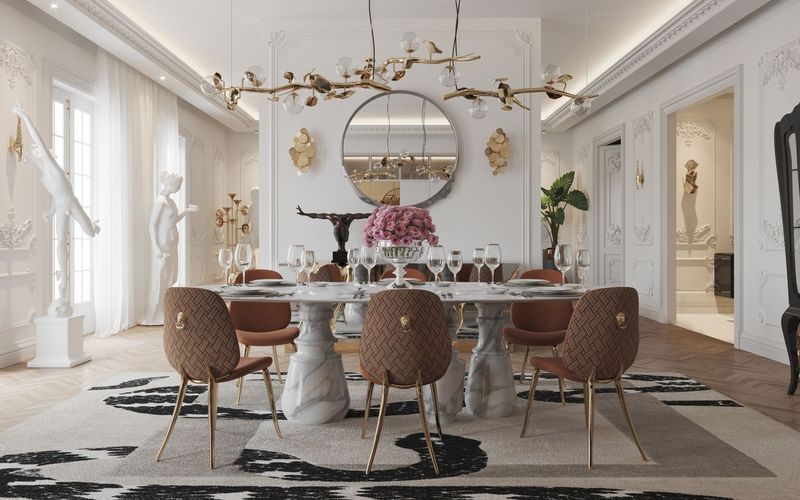
The Soleil Chair is the chair I reach for when dining rooms start to feel rigid. The curve of the back, the upholstered frame, the proportions, all of it softens whatever it sits next to. Pair it with a heavy architectural table like the Empire and the chair humanizes the room. Pair it with a wood table like the Fortuna and the chair adds a layer of comfort without competing for warmth. dining rooms with too many hard edges are exactly where the Soleil earns its keep.
As a host and hostess chair, the Soleil is the move most dining rooms are missing. Eight matching chairs down the sides, two Soleils at the heads. The room reads as composed, the heads of the table get a more generous seat, and the eye has a place to rest. Veranda has written about how a single chair change can carry a dining room, and the Soleil is the chair that most often does the carrying. dining rooms that get this one move right tend to feel finished, even when nothing else in the room has. Avoid pushing it into a corner as an accent. The Soleil needs the table to make sense.
One last note on color. The Soleil takes upholstery well. Pick a tone that picks up something in the rugs or the art on the walls. dining rooms come together when the chair fabric rhymes with something else in the room.

Pulling a luxury dining room together
None of these pieces work alone. The Empire wants a chair that can hold its own against the weight. The N11 has to sit next to a table that does not fight it. Fortuna needs light that respects the wood. Metamorphosis asks for space, and the Soleil wants a table to anchor against. That is how dining rooms come together. One piece, then the next, each one chosen to support the others. dining rooms built this way tend to age well, because every piece was chosen with the others in mind.
If you are starting a dining room from scratch, pick the table first. Chairs come second. lighting after that, then cabinets or consoles for storage, with rugs and mirrors as the finishing layer. Skip the matching sets. The dining rooms you actually want to eat in are built one piece at a time, and the pieces are the ones that mean something to you.
A dining rooms project is a long game. The room you finish in year one is rarely the room you end up with in year five. Live with the table. See how it ages. Add the chairs when you find the right ones, not when the schedule says you should. The dining rooms I keep going back to were ten years in the making, and most of them had at least one piece swapped out twice before the room felt right.
See Also: Private Luxury Villa in Dubai: A Masterpiece of Design and Opulence