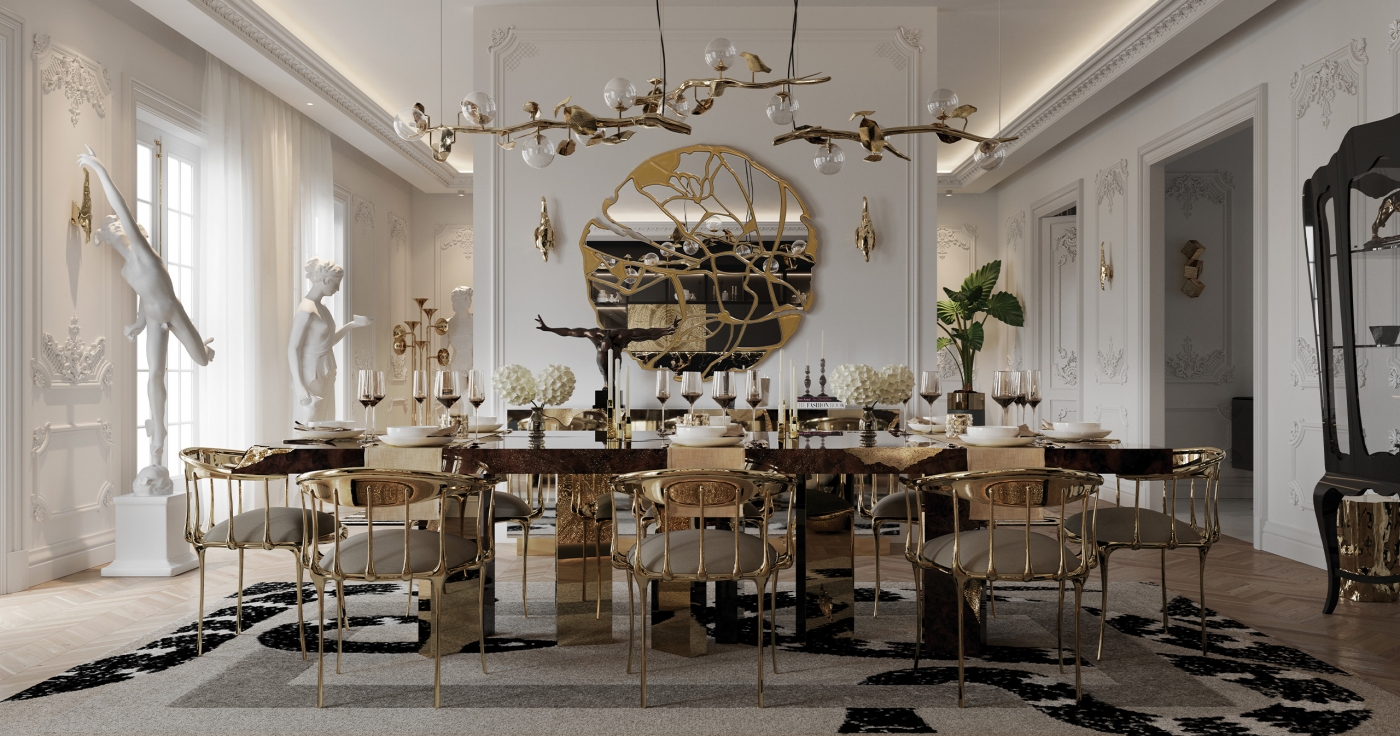
If you follow interior design closely, you’ll have noticed that the dining table trends conversation has shifted in the last few years. It’s less about shape and more about what the table communicates. The material choice. The base. The finish. Whether the piece reads as furniture or as something closer to sculpture.
Dining table trends in high-end interiors have always moved slowly. The dining room is a space people invest in once and live with for years, so decisions tend to be deliberate. What’s interesting right now is that the deliberateness is pointing in a different direction than it was a decade ago. Less restraint, more commitment. Less matching, more contrast.
Below are five dining table trends worth paying attention to, and the Boca do Lobo pieces that execute each one.
See Also: Luxury Entryway Designs That Define Luxury
Dining Table Trends 1: Material Contrast as the Design Idea
For a while, the dominant approach in high-end dining table trends was tonal consistency. Stone top, stone base. Wood top, wood legs. Everything in the same material family. That approach has been replaced, fairly decisively, by deliberate contrast.
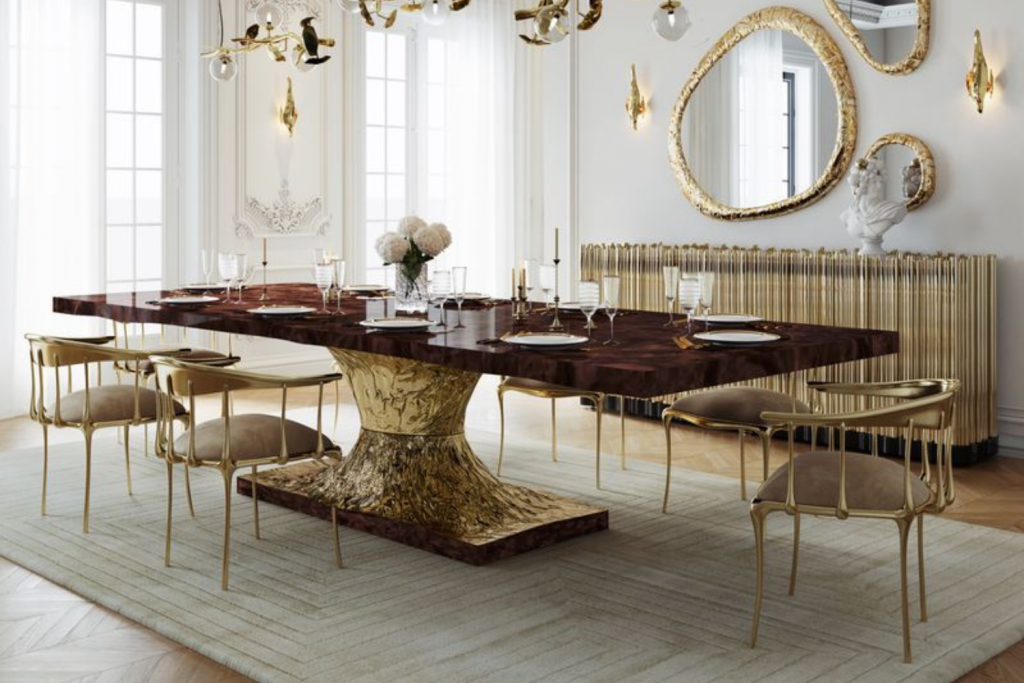
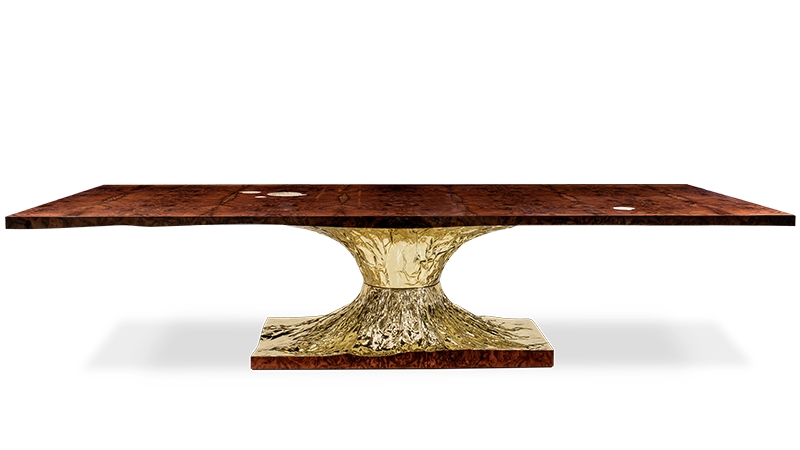
The Metamorphosis Dining Table is built on this idea. Polished brass legs beneath a marble top: two materials that are warm and cool at the same time, that respond to light differently and change character across the day. In a room with natural light, the brass reads one way in the morning and another in the evening. The marble stays consistent. That tension is the point.
What makes this one of the more durable dining table trends is that it doesn’t require a maximalist room to work. The Metamorphosis sits as well in a spare, minimal space as it does in a fully dressed interior. The contrast is in the piece itself. The room doesn’t have to do extra work to make it interesting.
Publications like Architectural Digest have documented the shift away from monolithic material approaches in dining room design, noting that mixed-material tables now dominate high-end interior project submissions globally.


Dining Table Trends 2: The All-Metal Statement
Not every dining table trend is about softening or balancing. One direction that’s become more visible in high-end projects is the opposite: committing fully to metal. One material, one finish, no apology.
The Fortuna Dining Table is that approach taken to its logical end. The polished gold surface and textured cylindrical base are the same material throughout. Nothing interrupts the finish. In a dining room that’s willing to build around it — deep-coloured seats, a strong rug, considered lighting — the Fortuna becomes the visual anchor the rest of the room answers to.
This is one of those dining table trends that divides opinion, and that’s probably why it performs well on interior design platforms. It generates a reaction. Rooms built around the Fortuna tend to be photographed a lot because they look like a decision was made and followed through. There’s something genuinely refreshing about that in an era of hedged, neutral interiors.
Dezeen has tracked the rise of single-material, high-polish dining pieces in luxury residential projects over the past three years, pointing to a broader appetite for commitment over compromise in high-end dining room design.

Dining Table Trends 3: Natural Material, Luxury Execution
There’s a version of the natural material dining table trend that produces very safe, very beige results. Untreated wood, linen, raw stone. It’s everywhere and it’s not particularly interesting anymore. What’s more compelling is when natural material is treated with the same craft investment as the finest metals: selected carefully, finished precisely, presented as the design idea rather than as a backdrop.
The Newton Dining Table uses myrtle root, a material that takes decades to form and produces a grain pattern that can’t be replicated or predicted. The gold base responds to it rather than competing with it. Each piece is different because the material is different. That’s not a marketing claim — it’s genuinely what myrtle root does.
In the context of current dining table trends, the Newton sits at the intersection of two directions: the natural material interest and the luxury craft investment. It’s a piece for people who find the mass-produced organic aesthetic unsatisfying and want something that’s actually singular.
Elle Decor has noted a growing distinction in high-end interior design between “natural-looking” and “genuinely natural” materials — and identified the latter as a defining characteristic of the most considered dining room projects in recent years.


Dining Table Trends 4: Dark Rooms, Darker Tables
The preference for light, airy dining rooms has been dominant in interior design coverage for years. Pale walls, white or bleached wood, lots of natural light. It’s not going anywhere, but there’s a counter-movement that’s gaining ground, particularly in urban apartments and in rooms where full-day natural light isn’t available anyway.
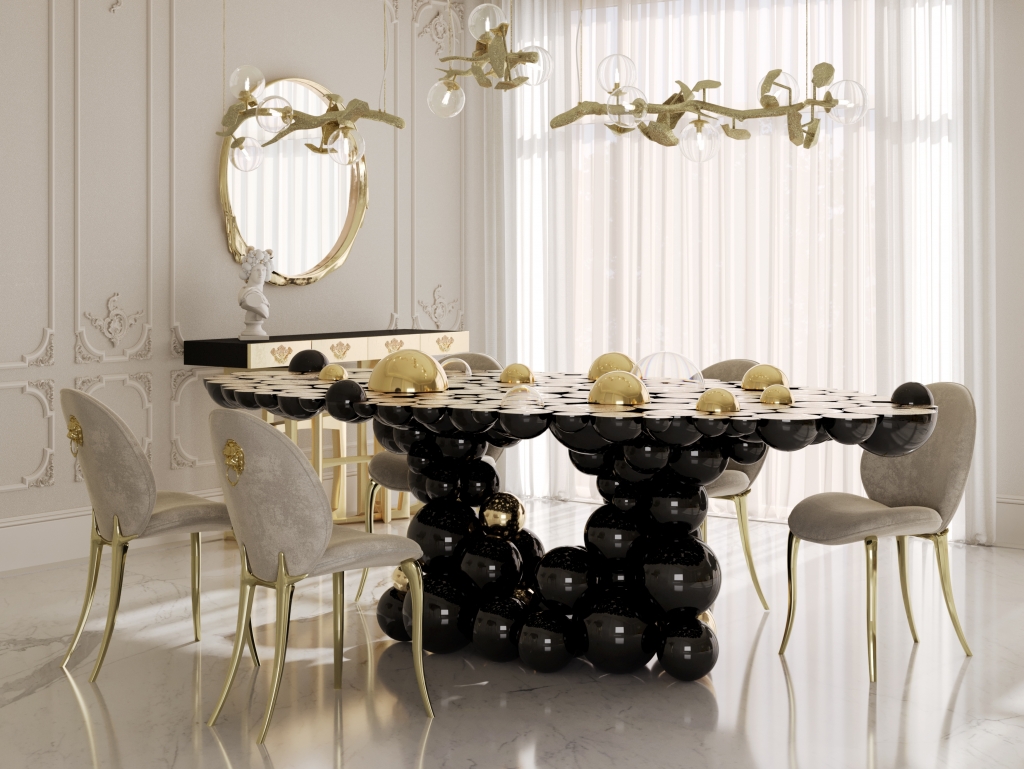
The dark dining room — deep walls, moodier lighting, a table that reads as dark or black — is one of the more interesting dining table trends in high-end interiors right now because it tends to produce spaces that feel genuinely different from everything else. The Bonsai Black Dining Table is made for this direction. The dark lacquered top and organic sculptural base read quietly in a pale room and dramatically in a darker one. It’s the kind of piece that changes character depending on its context more than most dining pieces do.
What keeps this among the more relevant dining table trends is that dark interiors photograph well. Depth and shadow give photographs dimension that pale rooms often lack. That’s not a trivial consideration for anyone who cares about how their interior reads in documentation or on social platforms.
House Beautiful identified dark dining rooms as one of the fastest-growing interior categories in high-end residential design in a recent trend report, noting a significant increase in project submissions featuring deep-toned dining spaces.


Dining Table Trends 5: The Base as the Design Idea
For most of furniture history, the base of a dining table was an engineering problem. How do you hold up the top without getting in the way of the legs of the people sitting around it? The answer was usually: four legs, evenly spaced, as unobtrusive as possible.
One of the more compelling dining table trends in contemporary high-end design is treating that engineering problem as a design opportunity. The base becomes the piece. The top becomes the surface that lets you see it.
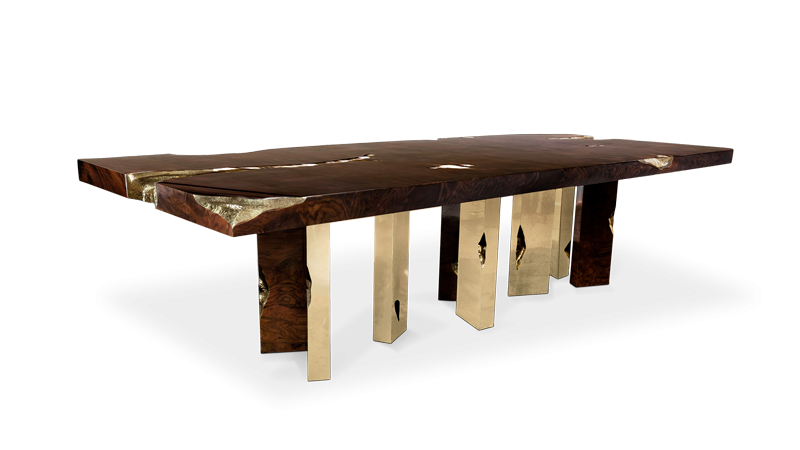
The Empire Dining Table makes this argument with precision. The dark oxidized base has hand-applied gold diamond inlays that are visible at floor level throughout a meal. From the moment guests sit down, the base is part of the experience. The table surface above holds the dinner. The structure below holds the room’s attention.
What separates the Empire from the generic “architectural base” category is the craftsmanship detail. The diamond inlays aren’t decorative in the way a turned leg or a tapered foot is decorative. They’re specific. They have a quality that rewards being noticed. This is one of those dining table trends that works because the piece has somewhere to go once guests are seated and looking at it.
Wallpaper* has consistently identified the base-forward dining table as one of the defining product directions in luxury furniture design, noting that the most discussed pieces in this category tend to be the ones with a clear design idea at floor level, not just at surface level.
What the Best Dining Table Trends Have in Common
These five directions don’t have much in common on the surface. Dark versus metallic. Organic versus engineered. Contrast versus commitment. But they share something at the decision level: each one requires the person buying the table to have a position. To know what kind of room they want and then choose the piece that makes it happen, rather than picking something that works with anything.
Dining table trends that gain traction in high-end design tend to be the ones that ask something of the buyer. The pieces above all do that.
Browse the full dining collection, or explore how seats, lighting, mirrors and cabinets work alongside these tables in a complete living room furniture approach.
See Also: Statement Furniture: The New Language of Luxury Interior Design