Why luxury interior design is about restraint
There’s a moment when you walk into a room and everything just feels right. You can’t quite name it at first. The light hits a surface a certain way, the proportions work, and nothing feels forced. That’s what luxury interior design is really about. Restraint, intentionality, and pieces that earn their place in the room.
A lot of people confuse expensive with luxurious. They aren’t the same thing. A room full of expensive objects can still feel flat if nothing talks to anything else. Real luxury interior design happens when materials, scale, and craft come together in a way that feels inevitable. Publications like Architectural Digest have made the same point for years.
Over the next few sections, we’ll look at five Boca do Lobo pieces that capture this idea in different ways. Some are loud. Some are quiet. Each one shows how a single object can change the temperature of a space.
Pixel Cabinet: a study in color and composition
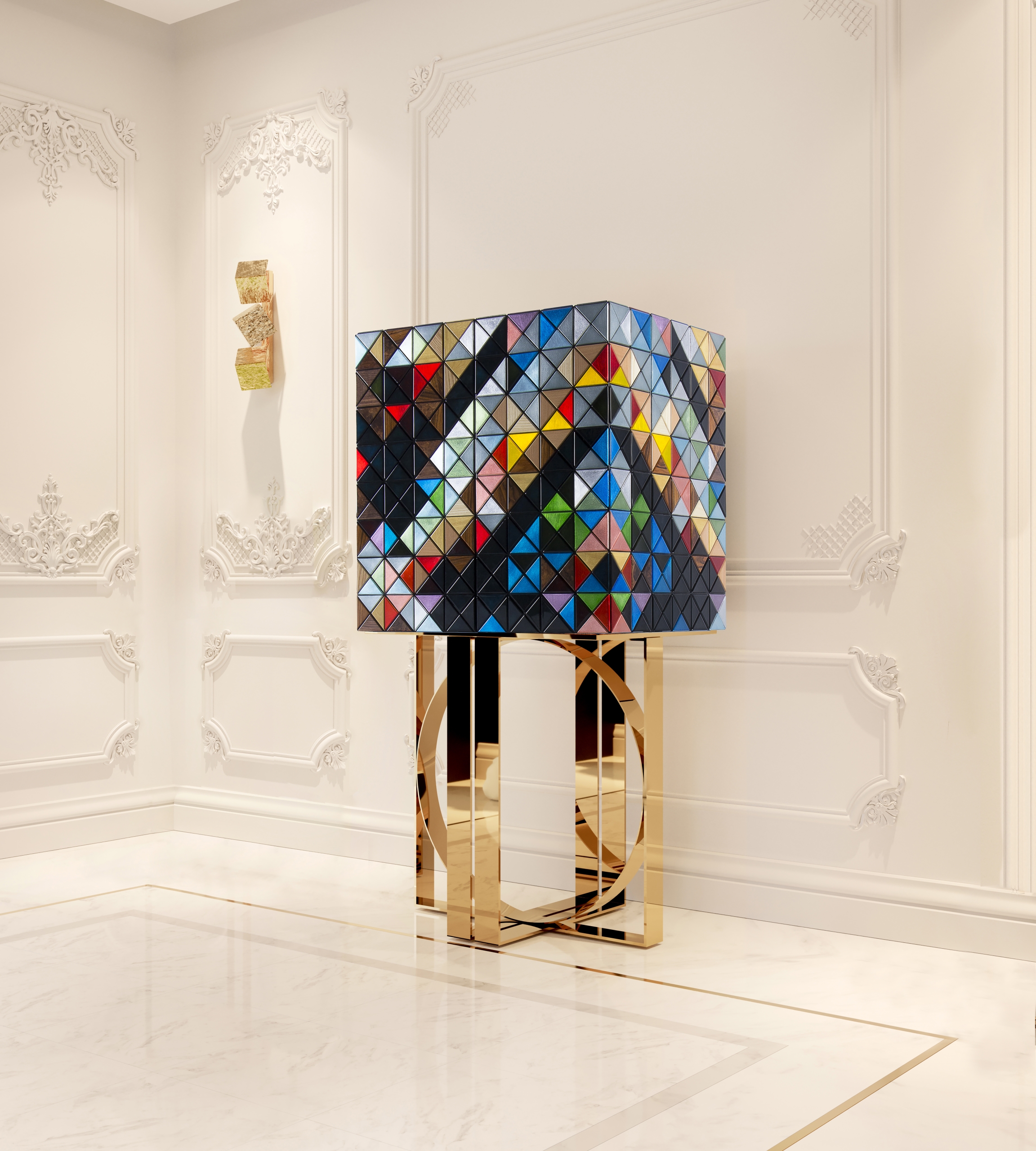
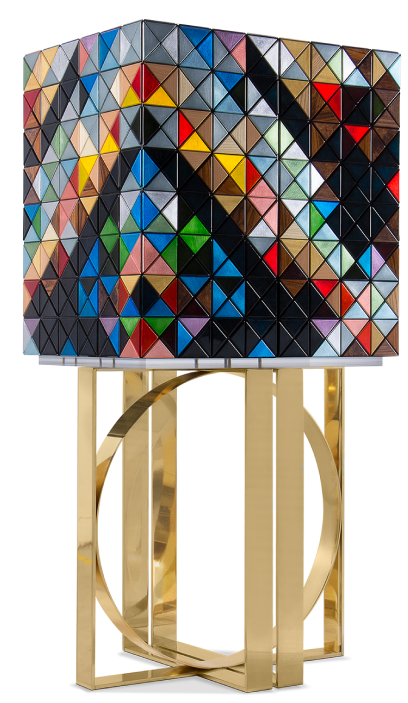
The Pixel Cabinet is one of those pieces that stops you mid-sentence. It’s covered in hundreds of hand-painted tiles, each one a different color, arranged in a composition that feels both random and exactly right. You can look at it for a long time and keep finding new details.
What makes the Pixel Cabinet interesting is how it works as both a cabinets piece and a sculptural object. You can use it as living storage, but honestly, most people use it as the center of the room. It works best when the room around it stays relatively simple. Let the cabinet do the talking.
In luxury interior design, color is often treated as something to be afraid of. Neutrals are safer. But the Pixel Cabinet shows that color, when it’s handled with craft and intention, can feel deeply sophisticated. As Elle Decor has noted when writing about color in interiors, confidence matters more than chaos. The Pixel Cabinet is loud because it has something to say, not just for the sake of being loud.
Pair it with a clean consoles piece nearby and a single statement lighting element above. Anything more, and the room starts to compete with itself. The same principle applies to tables placed nearby. Keep them quiet, and the Pixel Cabinet carries the room.

Empire Dining Table: architectural weight for the dining room

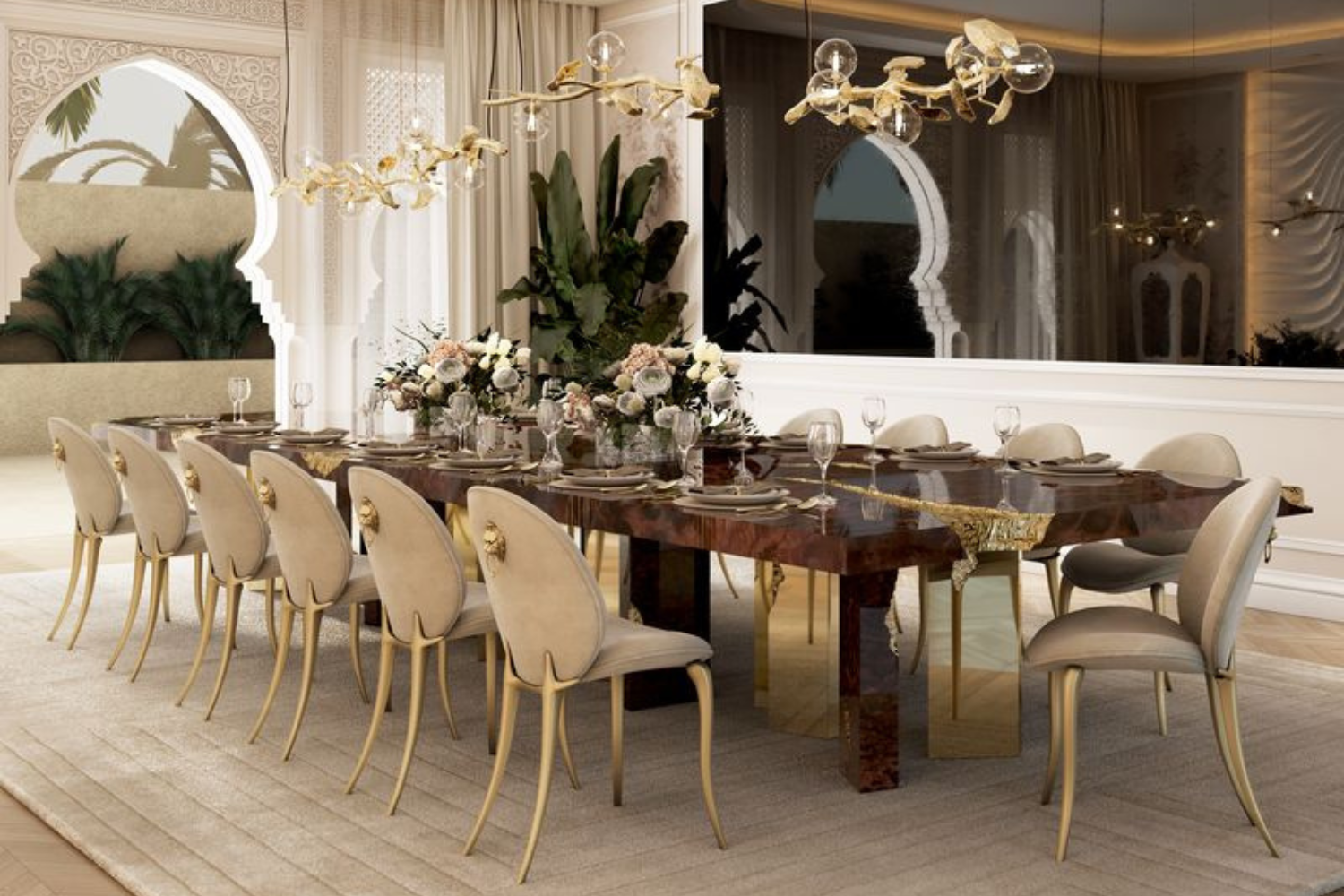
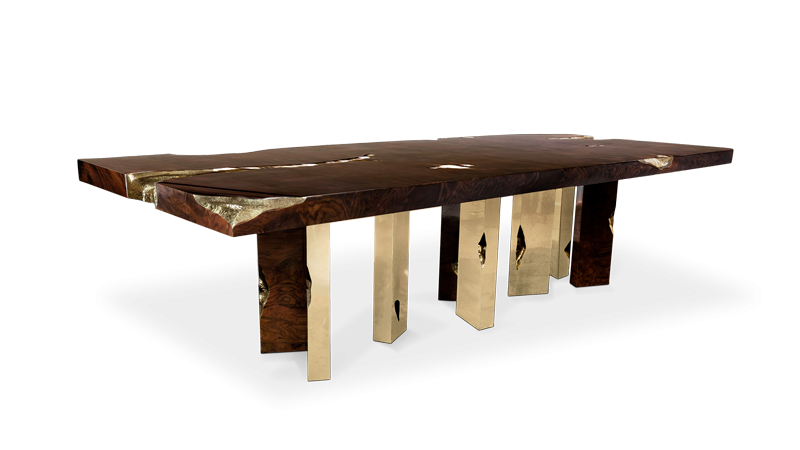
Some tables try to disappear into the room. The Empire Dining Table does the opposite. It shows up. With a strong architectural base and a solid top, it brings a sense of permanence that few dining pieces can match. This is the kind of table that makes people slow down when they enter the room.
The base is what gives the Empire its character. The lines are clean but heavy, almost monumental. You feel the structure, not just the surface. In a luxury interior design context, that matters. Weight, when it’s done well, doesn’t feel oppressive. It feels grounding. It tells you the room is serious about being lived in.
The Empire works particularly well in larger dining spaces where it has room to breathe. Pair it with seats that have presence but not bulk, and let the table carry the architectural weight. Above it, a sculptural lighting piece can add verticality without competing with the table’s horizontal lines. mirrors placed nearby can amplify the effect, bouncing light back onto the surface and making the room feel larger than it is.
If you’ve ever sat at a table that felt too small or too fragile for the room around it, you understand why this piece exists. luxury interior design is partly about matching scale to space. Get that right, and the rest of the room starts to fall into place. House & Garden has written about how scale, more than style, is what makes a dining room feel right.
Lapiaz Sideboard: texture that draws you in
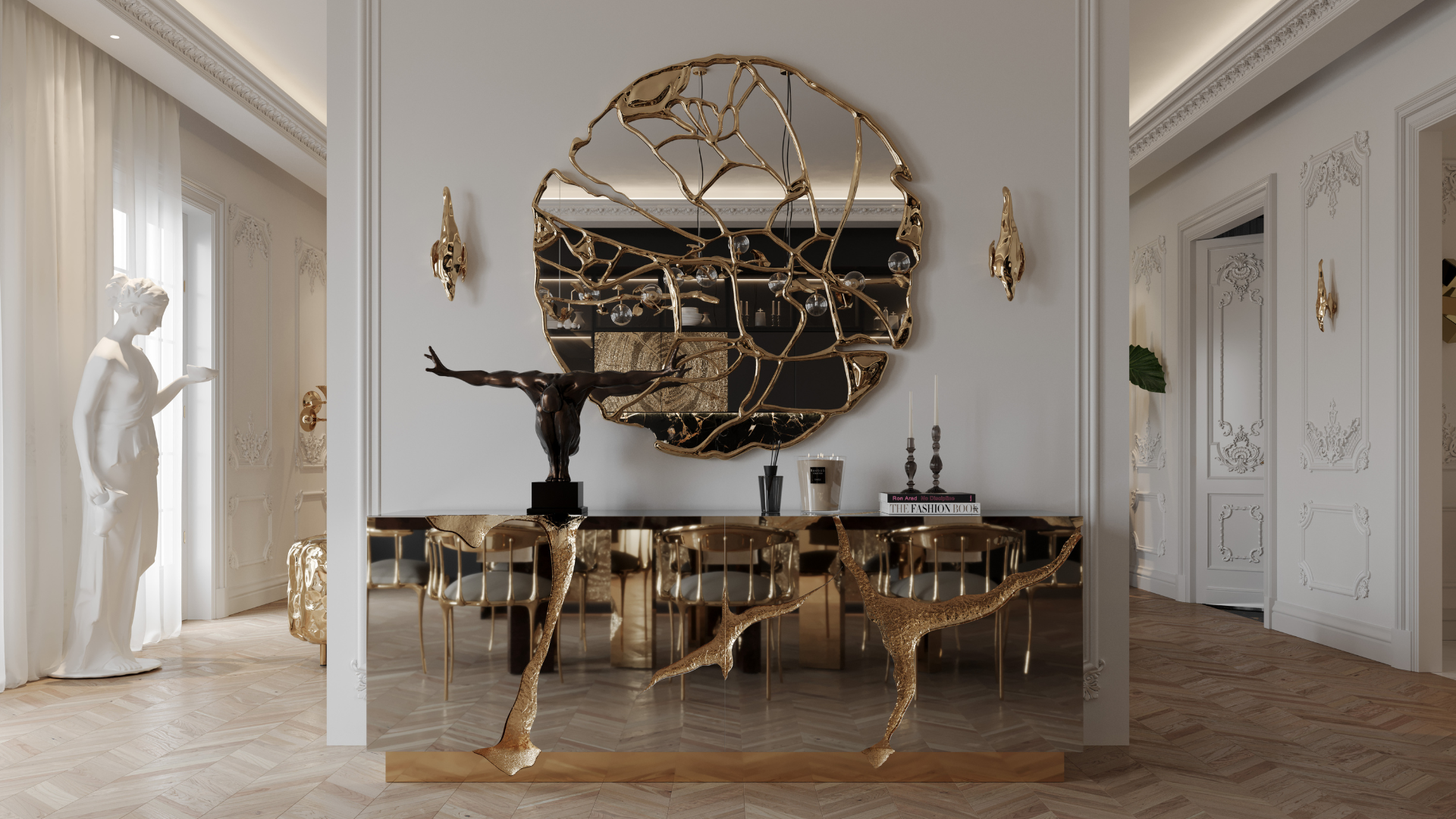
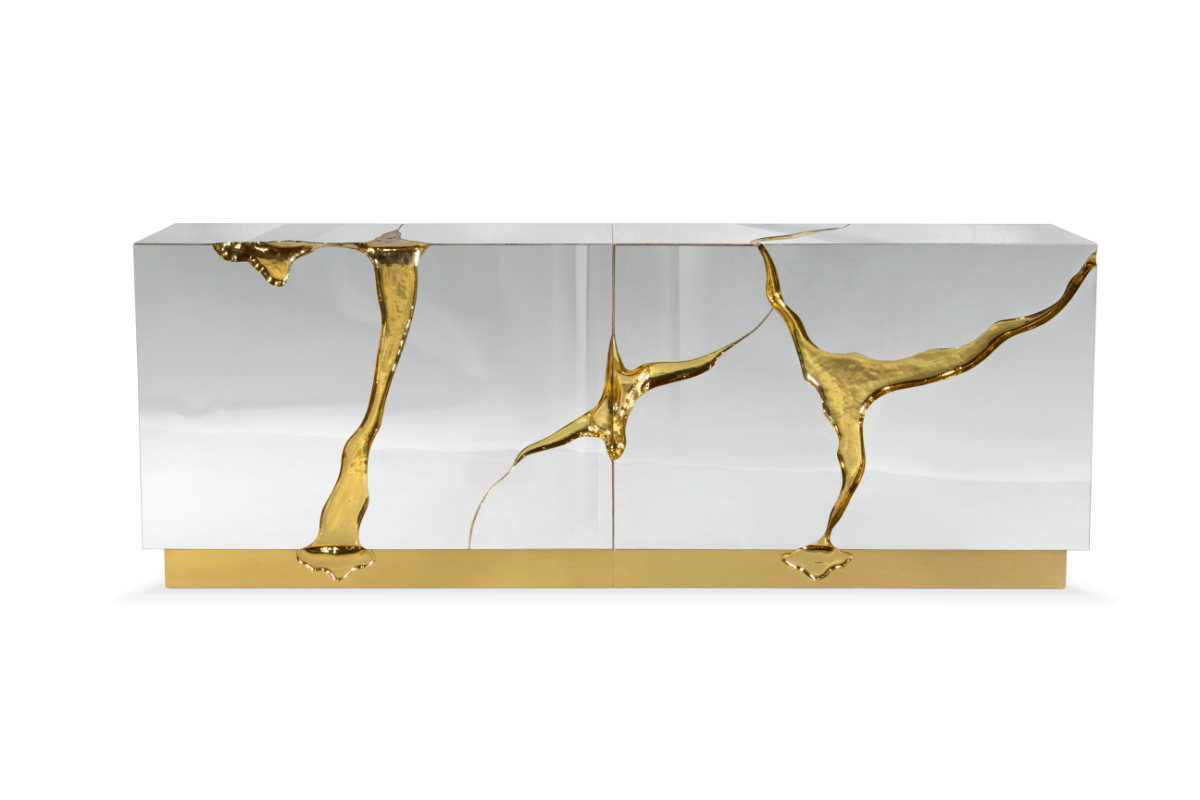
Smooth surfaces are easy. Texture is harder. The Lapiaz Sideboard goes all in on texture, with an organic, almost cracked facade that looks like it was carved out of stone rather than built in a workshop. It’s one of the most distinctive cabinets pieces in the Boca do Lobo collection.
The story behind the Lapiaz is that it was inspired by natural rock formations, the kind of surfaces that take thousands of years to form. You can see that in the way the front is structured. The gold accents on the cracks add a layer of warmth without turning the piece into something gilded.
In luxury interior design, texture often does more work than color. A room can be entirely neutral and still feel substantial if the surfaces have depth. The Lapiaz is a good example of how that works. Place it against a plaster wall, pair it with a soft rugs underneath, and the contrast does the heavy lifting. That kind of layered surface is what separates ordinary rooms from serious luxury interior design work.
It also reads as a consoles piece in some settings, especially in entryways where you want something with personality but not too much visual noise. The Lapiaz has presence, but it isn’t loud. It invites you to come closer. Dining spaces often benefit from this kind of restrained texture, especially when placed near large tables that might otherwise feel cold. Design publications like Dezeen have written about how texture is becoming the new color in high-end interiors, and pieces like this one are part of that shift.
Pixel Anodized Sideboard: metallic surfaces with depth

If the Pixel Cabinet is about color, the Pixel Anodized Sideboard is about light. The same tile-based construction, but with an anodized aluminum finish that shifts depending on where you stand. Move around the room, and the surface changes. That’s how the material behaves.
In luxury interior design, materials that respond to their environment matter because they make a room feel alive. A flat surface is just a flat surface. A surface that catches light differently throughout the day adds a layer of movement to the space, even when nothing is moving.
The Pixel Anodized works well in living rooms that get a lot of natural light. Place it near a window or under a skylight, and the finish really sings. Pair it with a statement mirrors piece on the wall above, and you double the effect. The light bounces between the two surfaces and fills the room with a subtle, shifting glow.
This is one of those cabinets pieces that asks for restraint around it. Too many metallic surfaces in one room and the effect gets muddy. One strong piece, paired with quieter consoles or seats nearby, lets the anodized finish do what it does best. Lighting choices should follow the same logic. A soft rugs underneath can also help ground the piece without competing for attention.

Heritage Sideboard: storytelling through pattern
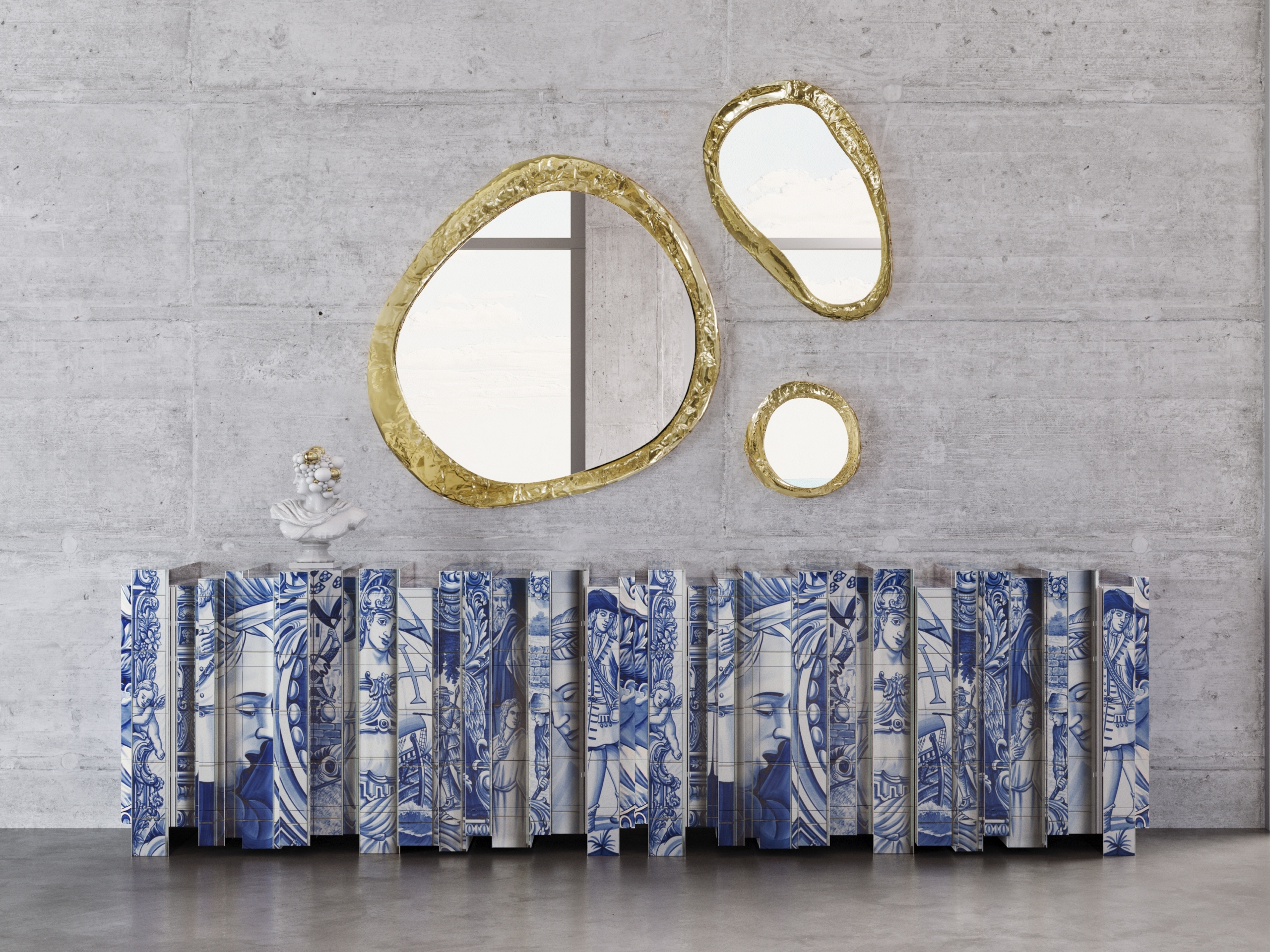
The Heritage Sideboard is the most personal piece in this list. It’s covered in hand-painted Portuguese tiles, the kind that have been used in Portuguese architecture for centuries. Each tile is hand-painted, and the patterns tell stories about craft, place, and tradition.
What makes the Heritage work in luxury interior design is that it doesn’t feel nostalgic. It feels current. The proportions are modern, the finishes are clean, and the tilework is integrated rather than applied. You’re looking at a piece that takes a tradition and brings it forward.
In a living room, the Heritage Sideboard can anchor a wall on its own, but it also pairs well with strong tables when placed in a dining context. Pair it with lighting that highlights the tilework, a soft rugs underneath, and a mirrors piece nearby to bounce light back onto the surface. You end up with a corner of the room that feels intentional and rooted. It’s a piece that asks to be lived with. The Portuguese tile tradition is one of the oldest living craft practices in Europe, and pieces like this keep it in contemporary conversation.
If you’re working on a luxury interior design project and you want one piece that carries a story, this is a strong candidate. The story lives in the structure, not in decoration.

Pulling a room together
None of these pieces work in isolation. A Pixel Cabinet needs a quiet room around it. The Empire Dining Table needs space. The Lapiaz needs contrast. The Pixel Anodized needs light. The Heritage needs context. That’s the unspoken rule of luxury interior design. Every piece is in conversation with the room around it.
If you’re starting a project, pick one piece that matters most and build around it. Don’t try to fit everything in at once. A room grows piece by piece. Start with the larger tables and cabinets, then bring in seats and lighting that complement them. mirrors can open up the space when placed thoughtfully. rugs tie the floor to the rest of the room. consoles fill the gaps. The living details come last, the small things that make a space feel personal. Stack them carefully, and the room starts to feel like it was always meant to look that way.
luxury interior design is a series of choices that, when they line up, feel inevitable.