An idea for a spa wall came to Dawn Ward in a Paris gallery. Something in a work of art suggested the surface of lava, and she carried that impression back to the drawing board. Years earlier, at twelve, she had designed the curtains and furniture for her own bedroom. The distance between those two commissions is considerable. The instinct behind them feels remarkably consistent. For Ward and Arista, a room begins with something worth making specifically for the person who will inhabit it.
See also: Borges Architects: The Art of Shaping Modern Living
The British Roots of Arista Design
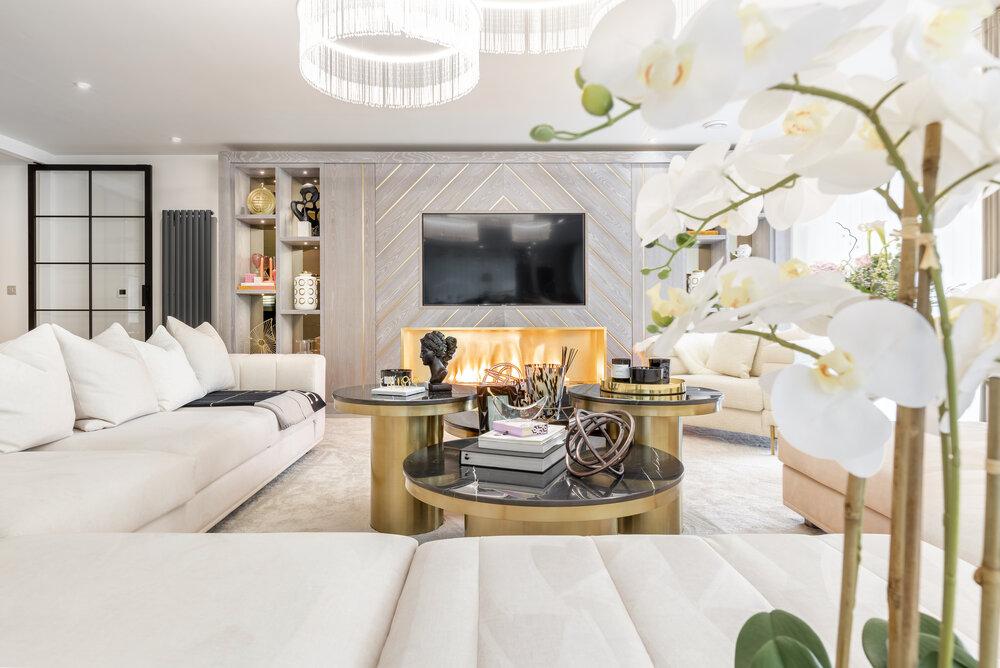
By the age of twenty-four, Ward had started her own property and design business. In an interview with The Design Society, which identified her as a director of Arista Design, she traced her career from smaller commissions to work across Europe. Travel and art remained important sources of inspiration. A gallery visit, in her account, could yield an idea for a surface. What interested her was the freedom to take something she had seen and give it another use.
Ward also made a revealing distinction between her own taste and that of a client. Her personal preference runs towards bold, opulent rooms with enough layers to reward a second look. Her job at Arista begins with finding out what someone else loves. That takes a particular kind of confidence. A designer may recognise the perfect print on sight and still have to ask whether the person who will wake up to it every morning feels the same way
How Arista Builds Layers of Colour and Texture
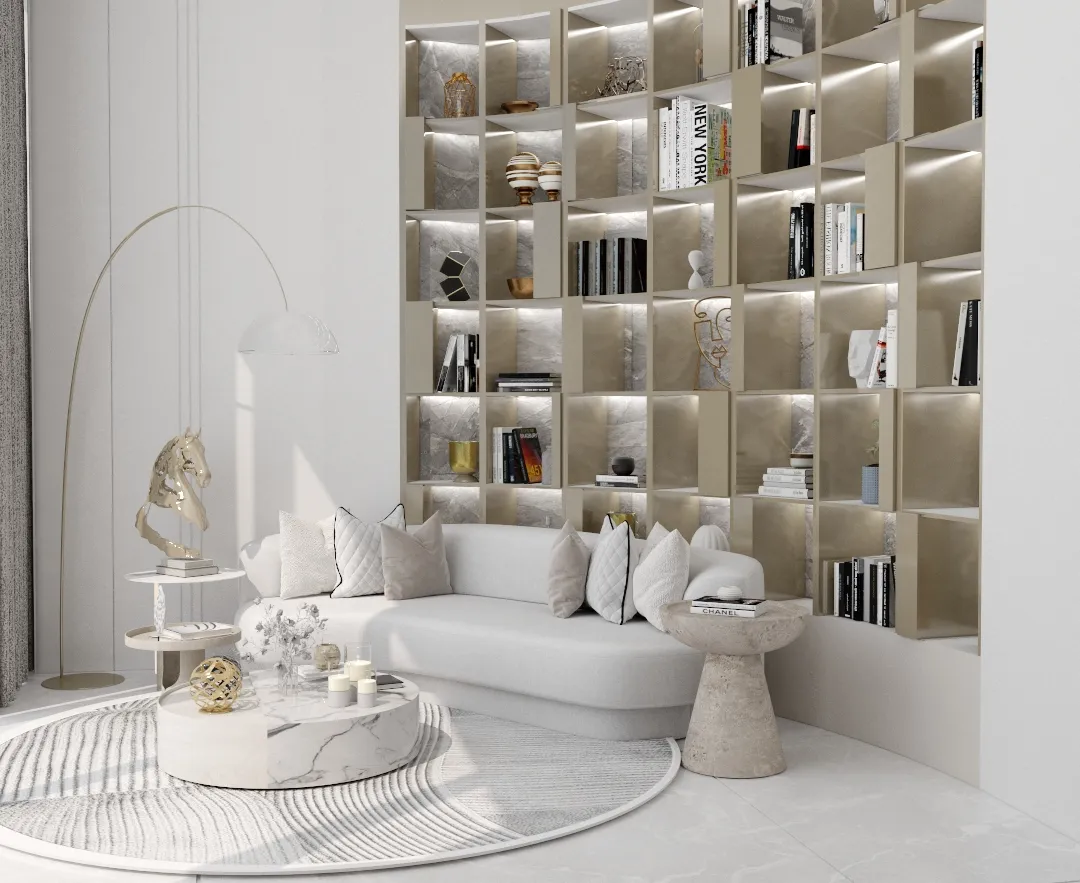
Among the elements Ward singled out in that interview were classic prints, warm colours and earthy tones. Together they offer a clue to the decorative language of Arista. An earthy ground gives the eye somewhere to rest. Against it, the outline of a chair or the repeat of a fabric becomes easier to read. A stronger colour can then occupy a relatively small area and still hold the room’s attention.
Texture introduces a different sort of variation. Imagine the same warm tone on a polished cabinet and a deeply folded curtain. The cabinet returns a sharp reflection. The cloth breaks the light into a succession of darker and lighter bands. This is one reason the Arista combination of fitted joinery, upholstery and soft furnishings is so interesting. Even a tightly edited palette leaves plenty of room for contrast.
From the Villa to the Apartment in Dubai

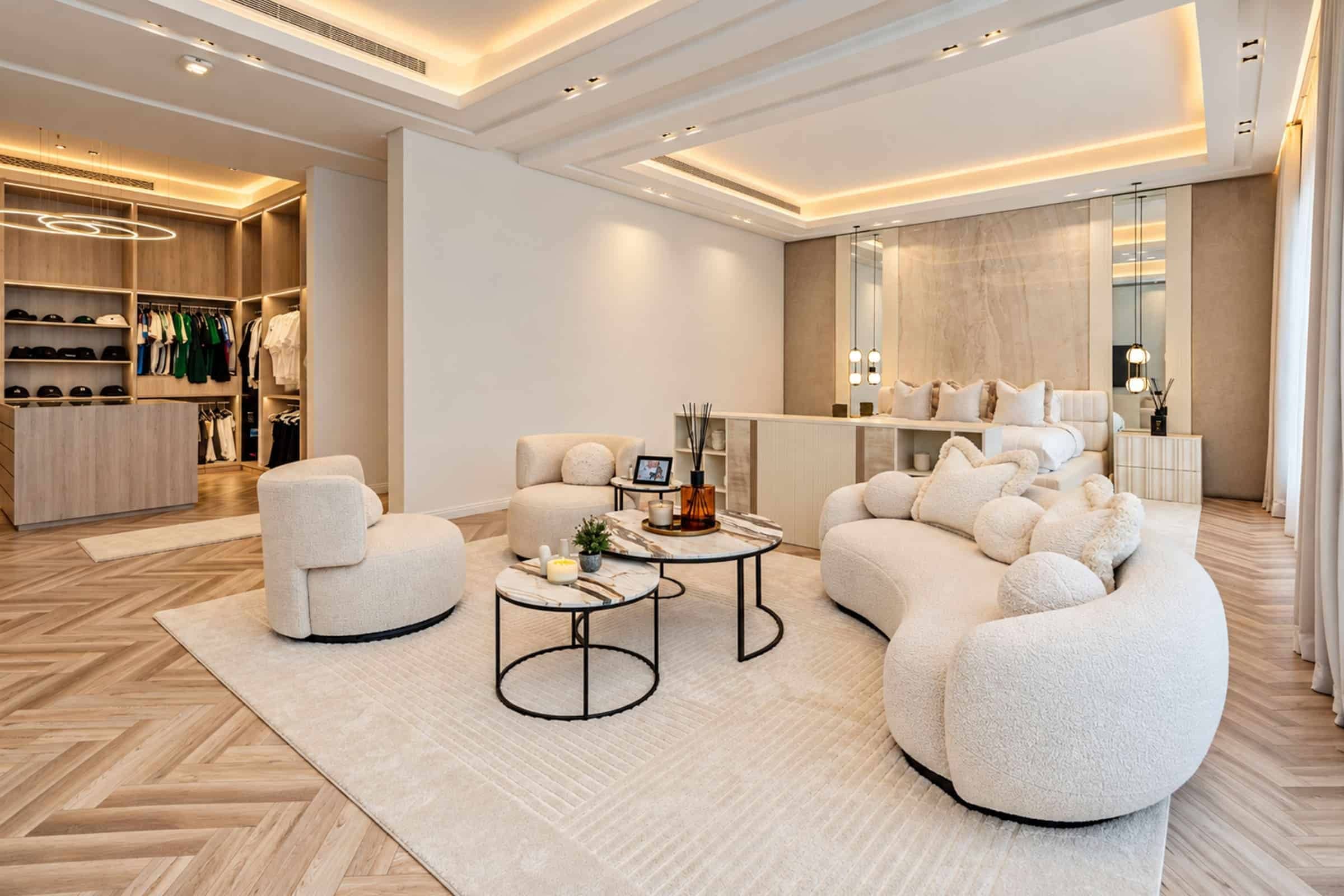
The portfolio of Arista International includes a family home at Jumeirah Golf Estates in Dubai, a villa in Jeddah and the Lakeside Apartment. The family home and apartment were already in print in 2023. Seen alongside Mayfair, they invite a different question about the studio’s work. What becomes of such an individual approach when the commission is a family residence or an apartment with a much smaller footprint?
One answer lies in the workshop. Arista produces cabinetry and custom furniture for its renovation clients, designing each piece for the wider scheme. A cabinet drawn alongside the wall it occupies gives the designer control over where the grain breaks, where a handle falls and how much space a door needs to open. Arista can consider those decisions while the room is still on paper, then revisit them during installation.
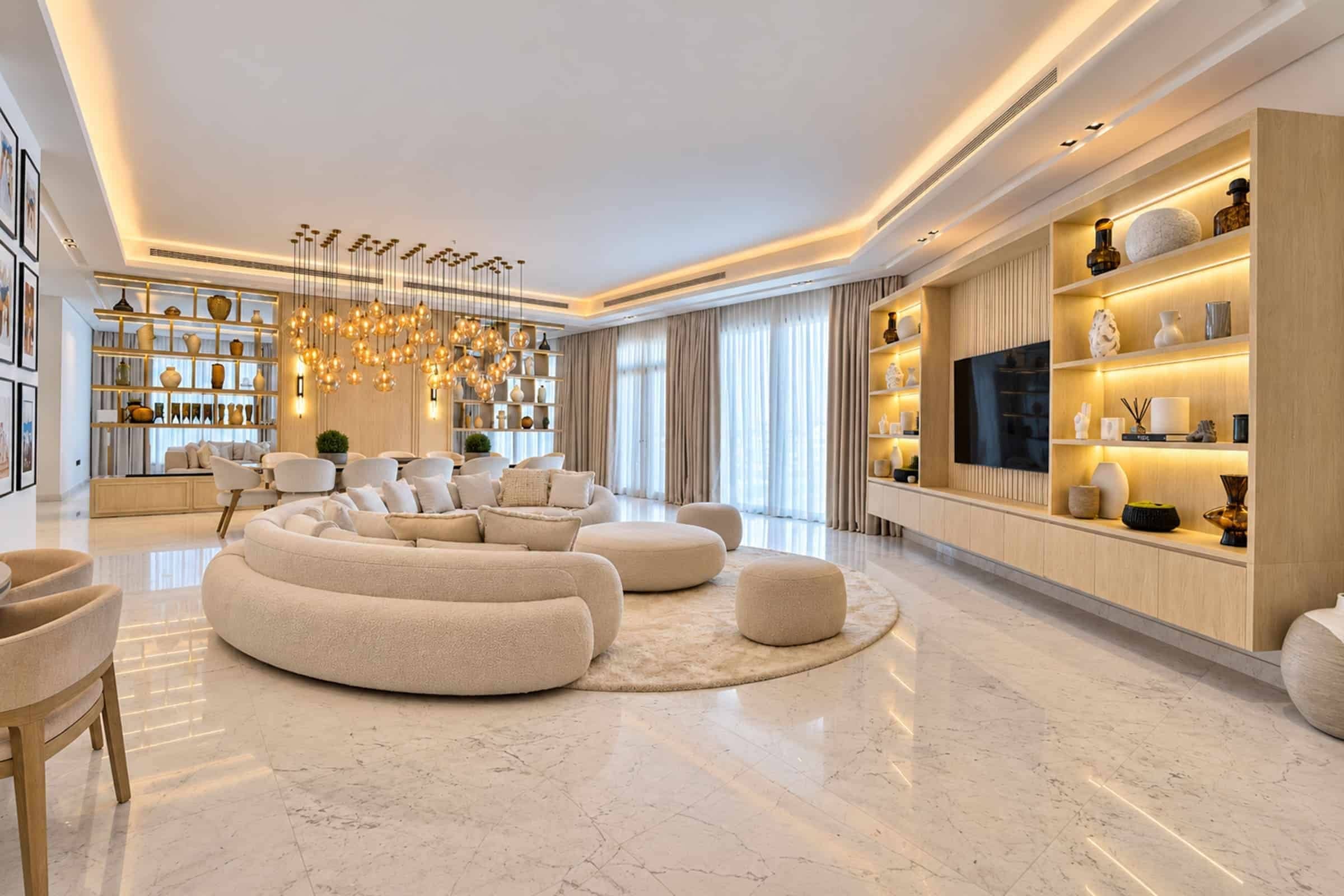
For readers of the Boca do Lobo blog, the marquetry at Mayfair offers a familiar pleasure. Mother-of-pearl and shagreen sit within the same decorative vocabulary, yet each asks something different of the hand that cuts and fits it. It is worth lingering over how Arista moves between a gesture big enough to fill a dining room and a detail small enough to fit beneath a fingertip.
See more: Wynn Al Marjan Island: The Vision Behind a New Icon of Luxury Hospitality